


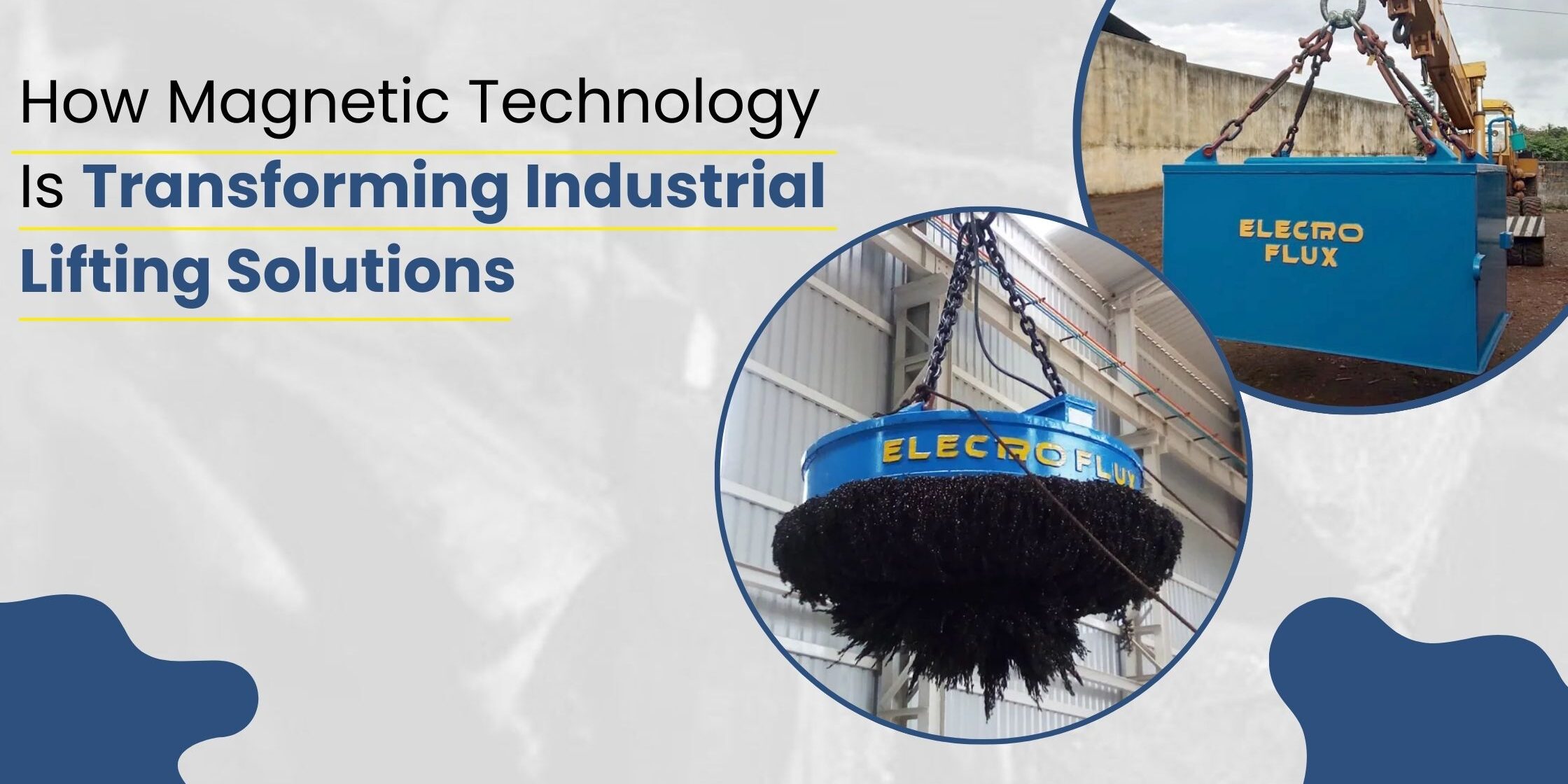
In the industrial sector, the task of lifting, handling, and moving material continues to be one of the most essential, as well as risky. For any organization engaged in the production of steel, foundry, processing, and manufacturing, there remains a constant demand for quicker, more efficient, and safer methods of lifting. In the last few years, the innovation of magnetic technology has proved to be a paradigm shift in the handling of lifting.
Magnetic systems are no longer the preserve of niche applications but are instead becoming an essential part of modern material handling technology and are an attractive alternative to conventional mechanical lift systems.
The Limitations of Traditional Lifting Techniques
Conventionally used lifting systems like hooks, chains, slings, and clamps have been in service in the industry for many years. However, they have many drawbacks, and sometimes they can become sources of many inefficiencies and risks in the execution of the project. Rigging the load manually is a skill in itself, thereby taking extra time to safely rig the load and being constantly subjected to inspections to avert failures.
When it comes to high-volume settings, such challenges automatically impact productivity. This leads industries to research high-performance magnetic lifting equipment that can reduce human involvement with the ability to maintain consistent lifting performance.
Understanding Magnetic Lifting Technology
Magnetic lifting is based on a very simple and efficient principle: the use of the force of magnetism to lift the material without gripping it. The design of modern magnetic lifting equipment takes into account its ability to produce a strong and regulated magnetic field to lift a large number of materials, like steel plates and other heavily fabricated components, like billets, pipes, and steel goods.
Two main types of usage in industrial applications exist: electro-based and permanent magnetic lifters. These two types are used depending on what is required in terms of function and application.
Applications Concerning Permanent Magnetic Lifter
The permanent magnetic are powered by high-strength and high-temperature permanent magnets. The system does not require any power source since the magnets are capable of performing the work. The system is a closed cycle and operational when the power is switched on.
The inherent advantage offered by their design is that it is safe. Power failure cannot cause the load to drop since the force of magnetism does not rely on electricity. Therefore, their design makes these lifts perfectly suited for usage in workshops, warehouses, or any other fabrication unit that would require reliable magnetic lifters.
Electro & Hybrid Magnetic Lifting Systems
However, in electrically driven magnetic systems, there is control over magnetic intensity and timing of release. Such systems are mostly used in automated systems where they are needed to be integrated with cranes or conveyors or robotics systems.
Sophisticated magnetic lifting equipment can also be tailored to deal with irregularly shaped materials, different thicknesses, and individually customized load configurations. The flexibility of magnetic lifting equipment has made it an essential part of steel mills, shipyards, and larger production units.
Practical Applications Pressing Adoptees
The increasing use of magnetic technology is a result of its operational advantages. The most prominent of these advantages is the aspect of safety. With the use of magnetic systems, there are no slings and hooks that come into contact with human beings. This has a prominent effect of reducing the rate of accidents.
Another benefit of this technology is improvement in efficiency. Quick loading and unloading of loads result in reduced processing times per unit of product, enabling the facility to process higher units without having to hire more staff. Eventually, lower operating and maintenance costs due to reduced machinery usage and ease of operation result in the technology being cost-effective.
Customisation and Industry-Specific Requirements
Every industrial setting is quite distinct. This is because factors such as the size of the load, the surface type, temperatures, and the cycles involved differ considerably in various industries. This means that standardized solutions will not always produce optimal performance.
Presently, industrial magnetic lifters are being increasingly developed with customization. From custom-made magnetic poles to special coatings and controlling systems, developers are working on application problems being encountered in various sectors like cement plants, power plants, chemical plants, or mineral operations.
How Electro Flux Equipments Pvt Ltd Meets Industry Requirements
In an industrial setting that is complicated, there may be challenges that go beyond the lifting capacities that these products must adequately support. Clients may have the following challenges: downtimes of the equipment, the compatibility of the equipment with existing machinery that they use, and inconsistent support from the suppliers of the equipment, among others.
Electro Flux Equipments addresses these challenges by concentrating on application-driven design and reliability. Through providing customized solutions for magnetic lifting according to distinct working conditions, they assist industrial sectors in implementing an efficient use of the industrial lifting system in their working procedures. By giving importance to reliability and low breakdown rates, they cut down on unplanned stoppages.
Such a solution-oriented approach embodies the overall industry trend that focuses on performance over the long term as opposed to obtaining equipment on a short-term basis.
The Future of Magnetic Lifting in Industry
As automation and smart manufacturing technologies progress, magnetic technology is also believed to be increasingly utilized in the material handling system. Further integration with sensor systems, automation systems, and predictive maintenance systems can prove to be highly effective in increasing efficiency in magnetic lifting devices.
Sustainability factors are also contributing to the adoption of magnetic systems. Less mechanical wear and tear, as well as low energy usage in particular applications, make magnetic systems compatible with the present needs of the environment.
Conclusion
Magnetic technology has revolutionized the way industries lift and handle material. Because of their safer handling, faster handling times, and flexibility in operations, the use of industrial magnetic lifters and permanent magnetic lifters has become a necessity in industries today. The coming age of industries promises to see increased harnessing of more advanced magnetic lifters in a proper industrial lifting solution. For organizations looking into cost-effective and application-based magnetic lifting technologies, insights into how Electro Flux Equipments overcomes current challenges will be highly informative on how to implement lifting technology that meets present and future needs.