



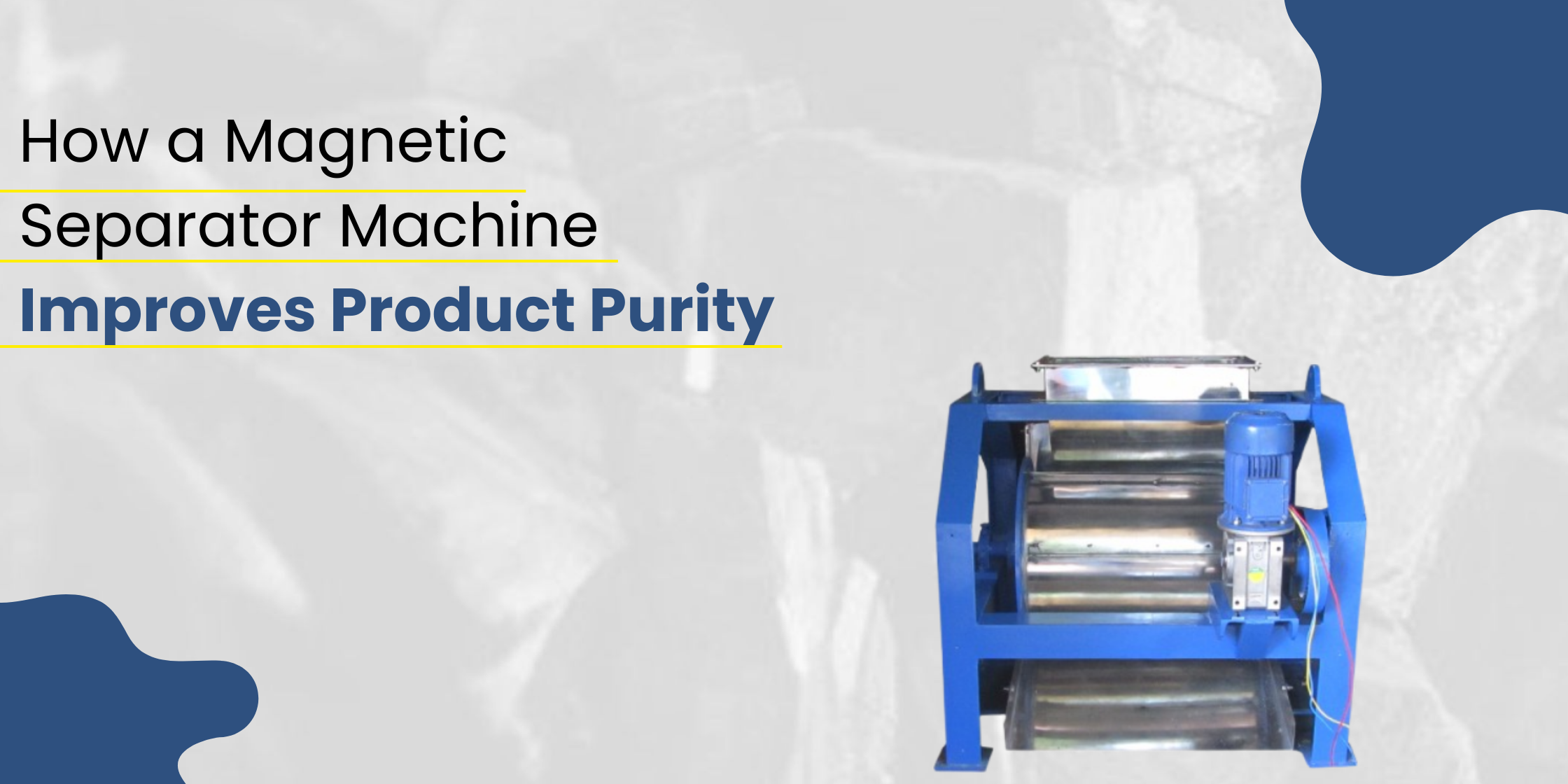
The manufacturing plants which process powders, granules, and bulk solids experience continuous degradation on their conveyors, crushers, mixers and packaging lines. The friction releases minute metal particles, which remain undetected until they begin to impact final products and damage delicate machinery. Companies now use contamination prevention methods as their primary defence. They are doing this because of increasing regulatory requirements and growing customer expectations.
A magnetic separator machine supports this shift by capturing metal particles early so that they do not reach critical stages of production. Through proper installation and process matching, it provides product protection and operational stability while boosting efficiency.
The Direct Impact of Ferrous Contamination on Product Purity
Ferrous contamination weakens the effectiveness of a magnetic separator machine when systems are undersized or poorly positioned. This allows fragments to move deeper into the process. Metal specks can oxidise in food or pharmaceutical powders and stain pigments. They can also trigger unwanted reactions in chemical blends. Scrap increases and rework becomes common. After that, customer complaints also occur.
The presence of metal debris creates several quality issues. This includes accelerated wear on rotating components, reduced bearing lifespan, and unexpected production halts. The equipment breakdowns result in higher maintenance expenses, which disrupt scheduled deliveries to customers. The process of reaching purity goals becomes increasingly challenging as time passes unless separation systems are applied early and maintained consistently.
How Magnetic Separators Remove Contaminants at the Particle Level
The magnetic separation process works by directing material streams through strong magnetic fields, which attract ferrous and weakly magnetic particles. When this magnetic force is stronger than gravity and product movement, contaminants shift away from the main flow and stick to capture surfaces or fall into reject zones.
Design features such as field strength, pole spacing, and magnet alignment are selected based on particle size and flow conditions. Self-cleaning systems stop material from accumulating on magnetic faces, which enables consistent performance throughout extended periods. Automated rejects have the ability to remove contaminated sections of material, which safeguards the remaining material.
Measurable Purity Improvements Across Industries
Companies in regulated industries assess how magnetic separation improves product quality by tracking their defect rate reduction, equipment damage prevention, and consistent batch production. Food processors experience fewer customer complaints, together with more efficient audit processes. Mineral operations produce cleaner concentrates that command higher prices.
The presence of tiny metal particles in pharmaceuticals and speciality chemicals causes formula disruptions and results in inaccurate dosage measurements. The dependable separation system maintains process stability while decreasing requirements for additional filtration and reprocessing activities. The operational enhancements result in increased production output, which drives down expenses while building customer confidence.
Strategic Placement for Maximum Purity Gains
The role of magnetic separator in quality control depends greatly on where the equipment is installed along the line. Separators at raw-material intake stop incoming contamination from spreading, while mid-process units protect mills, blenders, and extruders from internally generated fragments.
Layered Protection Through Line Integration
Final-stage separators verify that finished goods leaving the facility meet purity requirements. Together, these layers form a preventative system that supports certifications and audit records. Proper placement turns metal removal into a continuous safeguard rather than a last-minute fix.
Performance Specifications That Define Purity Outcomes
The performance of an industrial magnetic separator machine depends on its magnetic strength, temperature limits, construction materials and cleaning design. The high-intensity rare-earth magnets capture fine particles while the robust housings withstand vibration and abrasion and endure multiple wash-downs.
Key purity-influencing specifications typically include:
- Magnetic flux density and pole configuration
- Housing material and surface finish
- Cleaning method and access design
Long-term purity maintenance requires easy maintenance procedures. The combination of tool-free access panels, quick-release magnet cartridges, and sealed bearings will minimise system downtime. They also help in maintaining the optimal performance of separators. Together, these factors decide whether a system offers short-term gains or dependable control for years.
Choosing an Experienced Supplier
The process of selecting a suitable magnetic separator machine supplier requires more than just product catalogue comparisons. The design process needs three essential abilities, which include understanding the operational process, assessing physical locations, and creating tailored solutions.
Suppliers with their own engineering teams can analyse site layouts to recommend appropriate magnet systems and fit separators on existing conveyors. The equipment maintains purity standards throughout production changes due to robust service support, readily available spare parts, and performance testing.
Improving Product Purity With Magnetic Separators From Electro Flux Equipments
Electro Flux Equipments provides magnetic separator machine solutions for various industrial applications. The company produces separators for powders, bulk solids, and high-capacity conveying lines. Its primary focus is on offering durability and reliable performance.
Through customisation, strict fabrication standards, and responsive technical service, Electro Flux Equipments supports processors in installing systems. Such systems suit real operating conditions. This approach promotes steady contamination control along with long service life.
Conclusion
Companies require effective management of ferrous contamination because it serves as the foundation for their safe operations, regulatory compliance, and competitive business performance. The magnetic separation systems demonstrate how magnetic separation improves product quality under challenging conditions through their design fields and construction strength.
Electro Flux Equipments maintains its status as a reliable industrial partner because of its engineering expertise and extensive product offerings, which help companies achieve higher quality standards while establishing long-term process dependability through advanced magnetic separation.