



In heavy industries, the safe transfer of large pieces of metal is a daily activity. Industries such as steel plants, fabrication yards, ports, and scrap yards require efficient systems to lift steel plates, billets, and mixed scrap materials. Hooks and chains are used to lift these materials. However, in situations where lifting is to be done rapidly and repetitively, these conventional methods may not be ideal. Electromagnetic lifting systems could be used in such situations.
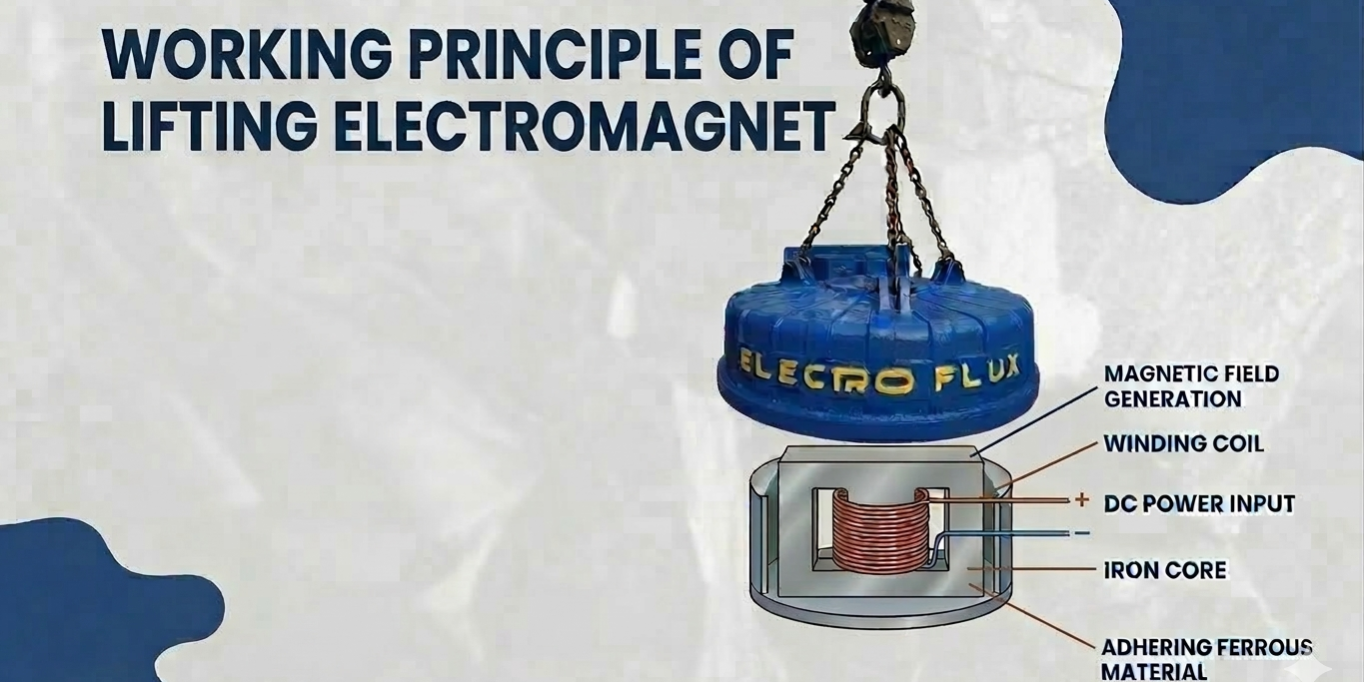
In order to understand the mechanism of these systems, it is necessary to understand the working principle of lifting electromagnet technology, which simply means that electrical energy is converted into a magnetic force. This means that if an electrical current flows through a copper wire, it creates a magnetic field, which attracts ferrous material towards it, thereby lifting it. The lifting of material stops as soon as the electrical current is turned off, making it a reliable technology.
Electrical Construction and Magnetic Field Generation in Lifting Systems
A lifting electro magnet consists of a copper coil, a magnetic steel core, a strong casing, and a control panel. When direct current passes through the insulated copper coil, a magnetic field develops. This magnetic force is directed to the contact surface through the steel core, to which the metal object to be lifted is attached. The steps for lifting the metal object using the electromagnet include:
-
Direct current flows through the coil
-
A magnetic field is created
-
The steel core becomes magnetised
-
Magnetic force transfers into the metal load
-
The load is held firmly
The lifting force will depend on the current, the number of turns on the coil, and the surface contact. Even the smallest gap from rust, scale, and uneven scrap can decrease the holding force. Proper installation and usage are critical. Furthermore, the use of the appropriate magnet for the weight and size of the load can increase safety and efficiency.
Magnetic Circuit Efficiency in Industrial Applications
An industrial electromagnet functions optimally if the magnetic circuit is well designed. As soon as it is energised, magnetic field lines pass through the core and into the metal to be lifted. The object to be lifted becomes a part of the magnetic circuit, enabling a lifting force to be achieved. It is in this aspect that the internal design of an electromagnet is of critical importance. The main factors to consider in an industrial electromagnet’s design include:
-
Quality of the steel core
-
Shape and arrangement of the magnetic poles
-
Proper winding of the copper coil
-
Avoiding resistance in the magnetic path due to gaps or poor design
-
Even distribution of magnetic force across the contact surface
-
Proper insulation and tight assembly to prevent energy loss
The above design considerations ensure that the maximum magnetic intensity is applied to the load. Engineers also conduct simulation tests to ascertain that the magnetic flux is uniformly applied to loads of different sizes.
Impact of Surface Conditions on Lifting Force Stability
The efficiency of lifting depends on the surface conditions. Smooth, flat steel plates provide an even contact surface, which enhances the efficiency of the magnetic connection. The scrap pieces have irregular shapes, which cause small gaps between them. This reduces the efficiency of the magnetic interaction. Engineers calculate the thickness of the materials, contact surface, temperature, and safety factors before determining the lifting capacity.
In scrap yards, a scrap lifting magnet is used to lift and move mixed and uneven metal pieces. This is done to attract irregular shapes and avoid accidents due to the dropping of the metal pieces while moving with a crane. The choice of the type of magnet used depends on the material to be moved.
Use of Electromagnets in Recycling Plants
Electromagnets are also used in recycling centers to lift and separate ferrous metals from mixed wastes. These are mounted on cranes to transfer materials to the sorting or storage areas effectively. Furthermore, the process also minimises human effort to a great extent, which in turn decreases the possibility of injuries during work while maintaining the speed of operation.
Steel plants and service centers use a steel lifting magnet for the handling of plates, slabs, and structural sections, as the surfaces are flat and the frequency of lifting is relatively faster. This design ensures consistent lifting performance despite repeated use.
The fact that the magnet could be switched on and off instantly enables faster handling compared to mechanical tools. This minimises human effort, enhances safety, and boosts productivity in recycling yards and metal handling facilities.
Operational Parameters Influencing Lifting Performance
The performance of the lifting systems depends on the conditions of operation and maintenance. Some of the major factors include:
-
Steady supply of direct current
-
Controlled coil temperature
-
Clean and even contact surface
-
Correct magnet size for the load
-
Protection from dust and moisture
Inspection of the cables, insulations, and control systems on a regular basis helps to maintain the performance of the systems. Preventive maintenance ensures the consistency of the lifting capacity. Keeping detailed logs of the magnet’s performance helps schedule equipment replacements efficiently.
How Electro Flux Equipments Delivers Reliable Electromagnetic Lifting Solutions
Electro Flux Equipments specialises in the manufacture of electromagnetic lifting equipment for harsh industrial conditions. The company focuses on effective insulation for the coils, magnetic designs, and the overall build quality of the equipment.
Electro Flux Equipments offers lifting magnets for scrap yards, steel plants, fabrication units, and other similar industries. The company’s engineers assess the material handling requirements and then recommend the equipment accordingly. This is a practical approach to solving the problems while also ensuring the equipment is used for a longer period.
Conclusion
A proper understanding of the working principle of lifting electromagnet systems can aid industries in lifting ferrous materials in a safe and efficient manner. This can ensure smooth and quick operation.
With robust engineering skills, client-centric guidance, and reliable design solutions, Electro Flux Equipments has been providing top-notch and high-performance electromagnetic lifting solutions to various industries, helping them improve safety, efficiency, and productivity.