



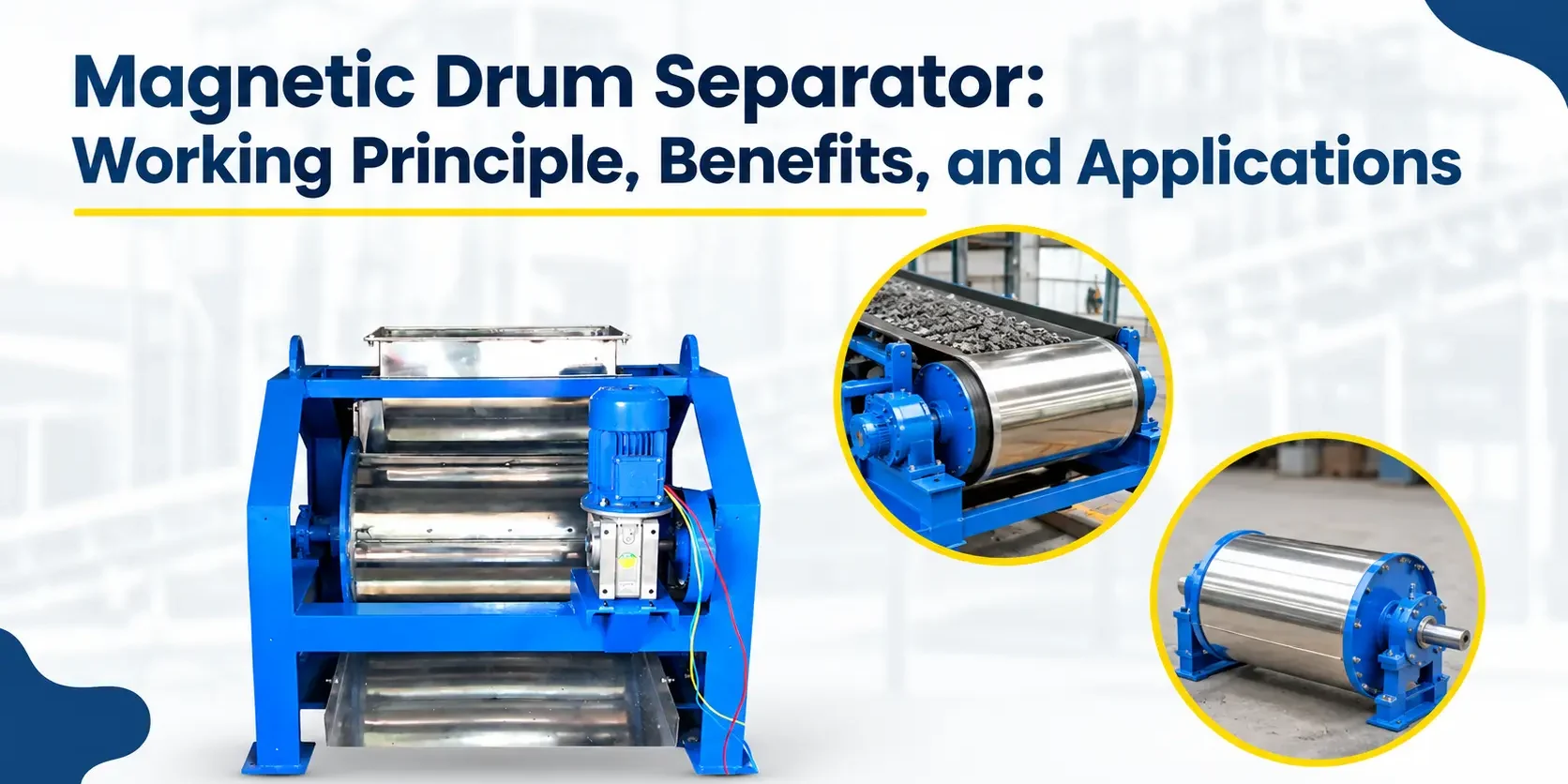
In many industrial applications, where bulk material is handled on a daily basis, many machines are used for different stages of processing. Magnetic separation is one such process, necessary for these material handling processes, where ferrous (iron and steel) materials are separated from the surrounding material.
Magnetic drum separators are widely used equipment for magnetic separation. They provide continuous separation while helping improve product purity and protect downstream processing equipment.
In this guide, let’s learn in detail about magnetic drum separators, their working principle, types, uses, and benefits.
What Are Magnetic Drum Separators?
A drum magnetic separator is an industrial separation machine that uses a rotating drum with an internal magnetic assembly that attracts and removes ferrous particles from a material stream.
Bulk material passes over the drum surface, where magnetic particles get attached to the drum surface while the non-magnetic material continues through the normal discharge path.
How Does a Magnetic Drum Separator Work?
The working principle of a drum separator is based on the attraction between a magnetic field and ferrous materials. What is ferrous metal? Ferrous materials are iron and steel materials that get attracted to a magnet.
A typical system contains a rotating outer drum and a magnetic assembly positioned inside it. The magnetic assembly remains fixed while the outer drum rotates. When the feed material reaches the drum surface, ferrous particles are attracted by the magnetic field and remain attached to the drum. Non-magnetic materials are not held by the field and fall away naturally.
As the drum continues to rotate, the captured ferrous particles move with its surface. Once they move outside the effective magnetic field, they are released into a separate discharge area.
Types of Magnetic Drum Separators
There are two types of magnetic drum separators, configured in different ways depending on the required magnetic field, material characteristics, and processing conditions.
Permanent Magnetic Drum Separators
A permanent drum magnetic separator uses permanent magnets to generate the magnetic field. These separators do not require an external electrical supply to maintain the magnetic field, providing an energy-efficient separation solution.
These types of separators are suitable for continuous applications where reliable ferrous removal is required without continuously powering an electromagnet.
Electromagnetic Drum Separators
Electromagnetic drum separators are best for material separation where electricity is available. These separators use an electrically generated magnetic field. This configuration can be selected where the application requires an electromagnetic arrangement or specific control over the magnetic system.
Industrial Uses of Magnetic Drum Separators
An industrial magnetic separator is used for several reasons across different applications because they continuously separate ferrous and non ferrous metals.
Mining and Mineral Processing
In mining and mineral processing, drum separators can be used to recover magnetic ores such as magnetite and support the separation of magnetic material from mineral streams.
Recycling and Waste Management
Recycling plants use magnetic drums to recover ferrous metals from mixed material streams. They can be applied to materials such as plastic, rubber, glass, and other recyclable products where unwanted or recoverable ferrous metal needs to be separated.
Cement and Aggregate Production
In cement and aggregate plants, magnetic drum separators can help remove ferrous material and protect equipment such as crushers and grinding mills from potentially damaging metal pieces.
Food and Grain Processing
Food and grain processing operations can use magnetic separation to help control ferrous contamination in bulk products. This supports product purity and helps protect processing equipment.
Chemical and Pharmaceutical Industries
Magnetic drums can be used to remove iron particles from powders and granules in chemical and pharmaceutical processing. This helps maintain material quality and reduces the possibility of ferrous contamination moving further into the process.
Scrap and Metal Processing
Drum separators can also be used in scrap processing and auto-shredding applications to separate ferrous metals from mixed material streams. This supports automated recovery and reduces dependence on manual sorting.
Key Benefits of Magnetic Drum Separators
There are several benefits of using a magnetic metal separator, such as:
- These separators remove ferrous particles continuously
- They help improve product purity
- By removing ferrous metals, they protect downstream equipment
- Their self-cleaning designs reduce the need for frequent manual removal
- Continuous automatic separation reduces downtime and processing interruptions
- Their robust construction provides a long service life
- These separators can be configured in different sizes
Factors to Consider Before Choosing Magnetic Drum Separators
A magnetic drum separator, also known as a ferrous metal separator, has several factors that affect its performance. Hence, to select the right machine for your application, you must consider these factors.
The first factor is material characteristics. Consider whether the material you want to separate is dry, wet, coarse, fine, abrasive, or powdery. You also need to consider the particle size and shape of the ferrous metals.
Select the right model with the exact feed rate, magnetic strength, drum dimensions, mounting arrangement, and cleaning requirements you want.
Reliable Magnetic Separators from Electro Flux Equipments
At Electro Flux Equipments, we bring robustly constructed magnetic drum separators that meet your working environment conditions. Our wide range of products includes all different types of magnetic separators, vibratory equipment, magnetic equipment, and spare parts and accessories.
We offer high-intensity permanent magnets or electromagnetic configurations, which are fully enclosed in stainless steel housings for hygienic applications. Furthermore, we provide step-by-step guidance and after-sales services.
Conclusion
A magnetic drum separator should be selected according to the material being processed, required separation level, feed rate, particle characteristics, magnetic strength, installation arrangement, and operating environment.
Get in touch with us at Electro Flux Equipments to receive customised options that suit all your needs and requirements.
