


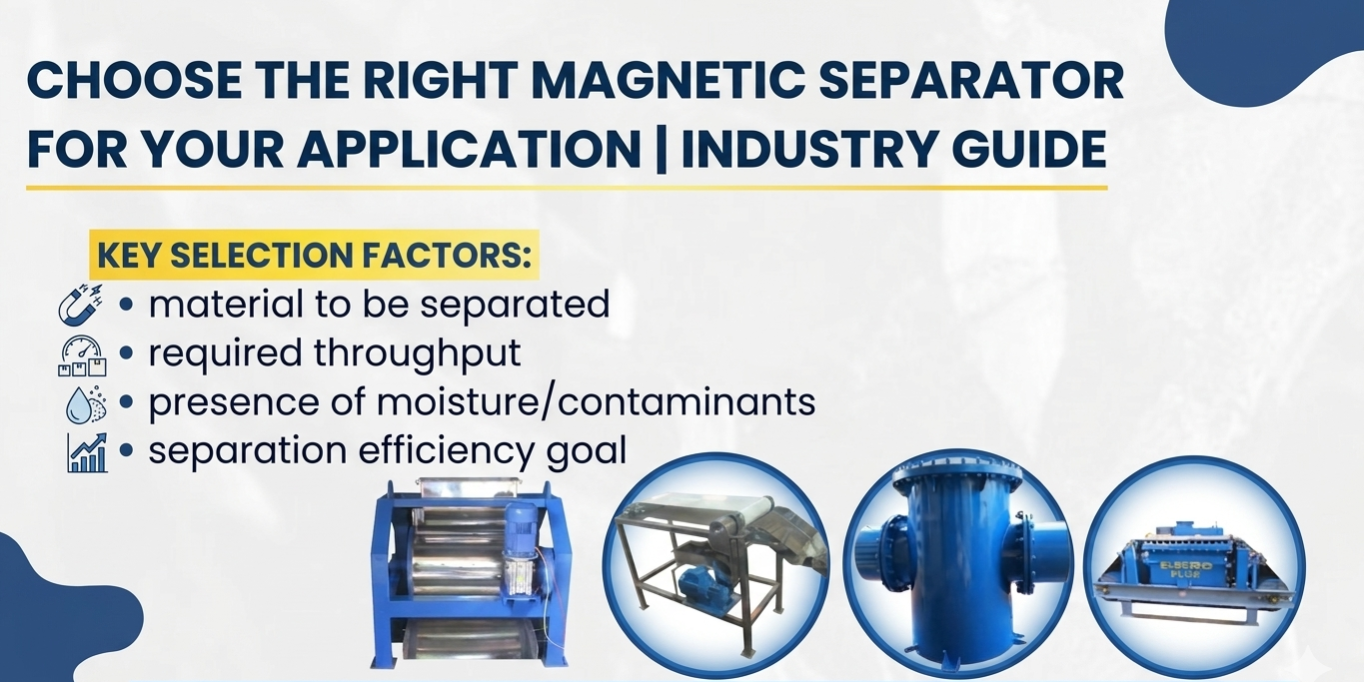
Magnetic separation is a crucial process in various industries where the processing involves the removal of metallic contamination. Be it in mining, recycling, cement plants or even food processing units, the right equipment will ensure proper material handling and operation management. However, choosing the proper equipment can be quite tricky due to varying materials, environmental issues and other contaminants.
In this guide, you will understand the role of magnetic separation systems, their types, and the factors that you need to consider when buying magnetic separation equipment for your industrial needs.
Understanding the Role of Magnetic Separation in Industrial Processes
Magnetic separation is very useful in ensuring that industrial activities remain safe and effective. It is used to eliminate both ferrous and non-ferrous metal contaminants from the raw or processing materials, using the magnetic force. By doing so, magnetic separation helps to protect various industrial machines such as crushers, conveyors, and grinders from the effects of metal contamination.
For example, in industries such as food processing, magnetic separation can help to meet safety requirements and prevent any contamination in the consumer-grade products. For mining industries, magnetic separation is useful in the concentration of minerals and ores. After installation, magnetic separators continue to operate continuously without much manual labour.
Types of Magnetic Separators and Their Uses in Industry
Knowing about different magnetic separator types will allow you to choose the most appropriate separator for your application. Every magnetic separator is best suited to perform in certain conditions.
Magnetic Drum Separator
The magnetic drum separator uses a revolving drum that removes the metal impurities in the material. The drum is effective in separating ferromagnetic particles, making it useful in industries that involve a significant amount of raw material, such as mining and recycling. It is suitable for continuous separation in applications involving dry material such as ore, sand, and coal.
Overband Magnetic Separators
Overband magnetic separators work above conveyor belts. Their main function is to extract large and bulky metal particles from the conveyor belt material. Overband separators have found wide application in various industries such as mining, cement, and recycling industries.
Suspended Magnetic Separators
The suspended magnetic separators are installed on top of the material stream. These can be placed either perpendicular or parallel to the conveyor belts. Suspended magnetic separators are ideal when the aim is to remove metal from moving materials in bulk handling systems.
Magnetic Roll Separator
The Magnetic roll separator is used in the separation of weak magnetic materials. The machine uses high-strength magnetic rollers for fine material separation. This equipment is mostly utilised in mining, ceramics, and glass industries due to its accuracy and efficiency in production processes.
Magnetic Grills and Housings
Magnetic grills and housings are equipment installed within hoppers, chutes, or ducts. Their function is to eliminate tiny ferrous contaminants present in powder or granular material. Magnetic grills and housings find extensive application in food, plastics, and pharmaceutical sectors where hygiene and purity are critical.
Key Factors to Consider When Choosing the Right Magnetic Separator
Now, how to choose magnetic separator that is suitable for your industrial process? In order to select a magnetic separator, you must be aware of some practical issues. You should evaluate:
Type of Material
It is important to examine the type of material being handled. The material should be examined to see whether it is either wet or dry, fine or coarse, and sticky or non-sticky. In many cases, fine powder requires high-energy separators for successful material separation. Bulk materials like coal or aggregates can be handled with a standard magnetic separation system.
Nature of Contaminants
Determine the specific type, particle size, and amount of metal contaminants. The ferrous particles are relatively easy to remove compared to weak magnetic and non-ferrous particles that require high magnetism. If the contaminants are very fine or a combination, then a more advanced magnetic separation system is needed.
Feed Rate or Flow Capacity
Make sure that your separator capacity matches the rate at which you are producing. For instance, if the factory is producing at a rate of 50 tonnes per hour, then it is essential that you have an adequate system capable of handling this continuous flow. Equipment with a lower feed rate will cause downtime, so choose as per your requirement or industrial standards.
Installation Location
The location of the separator will impact its effectiveness. An industrial magnetic separator can be mounted over conveyors, inside chutes, or where materials are discharged from an apparatus. Take into account available room, direction of the flow of the material, and ease of maintenance access. Keeping these factors in mind will help you make a better choice.
Maintenance Requirements
Maintenance affects future efficiency and expenses. Some equipment demands frequent cleaning, thus increasing labour. While other magnetic separators are designed with an in-built cleaning feature, helping minimise downtime. Ensure you buy a separator based on your maintenance capabilities.
Strength of Magnetic Field
The strength of the magnetic field should match the intended use. If your task is related to fine particles and/or weak magnetic minerals, then stronger magnets should be used. Standard magnets can be used in other cases. It is crucial to select the appropriate strength when buying magnetic separation equipment.
Industry-Specific Requirements
Every industry has its own set of standards to follow. For example, the food industry requires separators that are built with easy-to-clean designs. Industries such as mining and recycling require heavy-duty magnetic equipment that can withstand the harsh working conditions. Always consider the design and equipment capabilities to make a wiser decision.
A careful magnetic separator selection ensures efficiency, longevity of equipment, and low operational costs while also ensuring your process runs smoothly in the long term.
Electro Flux Equipments: A Trusted Name in Magnetic Separation Solutions
When choosing magnetic separation equipment, working with the right manufacturer can be a game-changer. Electro Flux Equipments stands out for its expertise in offering efficient and reliable magnetic separators. They manufacture a variety of magnetic equipment suitable for diverse industrial sectors, including scrapyards, recycling, cement plants and food processing units.
Their machinery is capable of withstanding harsh operating conditions without losing efficiency. They emphasise using quality materials and ensuring compliance with all testing standards. If you are looking to buy reliable magnetic separators, Electro Flux Equipment is your go-to choice.
Conclusion
Selecting the appropriate magnetic separator for industry ensures that you are able to produce high-quality products while ensuring the safety of your equipment. In order to select a suitable separator, it is necessary to focus on the properties of the material being processed, operational conditions, and proper design of the equipment.
Additionally, working with a reputable manufacturer such as Electro Flux Equipment helps you get reliable solutions that fulfil your industrial requirements and keep your operation running smoothly.