



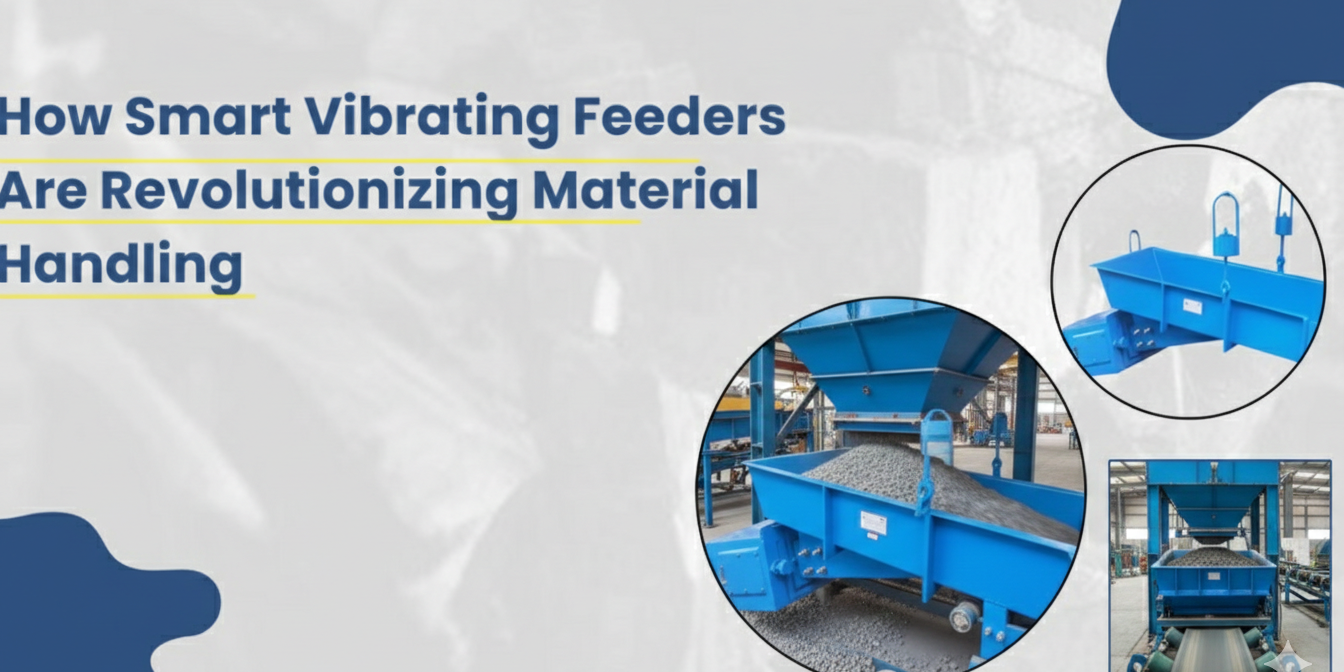
Industrial production lines will only function as efficiently as the systems that control the flow of material from storage through processing and packaging. Whether the facilities are processing minerals, aggregates, food ingredients, etc, unstable material flow will lead to bottlenecks, uneven machine utilisation, and early equipment degradation. Plant operators are being challenged to improve productivity while reducing waste and optimising energy use. This has pushed material handling technology to be more intelligent and responsive.
Therefore, modern facilities are now looking towards advanced vibrating feeder solutions that incorporate not only mechanical precision but also sensors and automation for real-time monitoring. These vibrating feeder systems are more than just things that move materials forward. They control the rate of feed, respond to changes in bulk conditions, and provide operators with a clear understanding of material flow across the line. The increasing adoption of these systems in digital plants indicates how material handling has become a key component of the overall shift towards smarter material handling practices.
Advanced Vibrating Feeder Solutions Driving Smart Material Flow
In modern smart feeders, load cells, vibration sensors, and PLC-controlled drives are used to control stroke length and frequency. This ensures that the flow of material remains constant irrespective of the moisture content and particle size, as well as the changes in hopper pressure during a shift. It becomes easier for the operator to monitor tonnage, tray movement, and motor load. It is done through dashboards that provide early warnings of impending issues. This helps handle the problems before production is slowed.
These feeders also have communication interfaces that connect directly to conveyors, crushers, mixers, or packaging equipment. With the speed of several machines being matched, the intelligent feeders eliminate upstream surges and downstream shortages, keeping the entire handling system in balance rather than relying on operators to balance the system manually. In fully automated facilities, this enables the feeders to respond immediately when downstream equipment stops, eliminating accumulation at transfer points and reducing cleanup after short stops.
In addition, large multi-line facilities benefit from feeder-to-feeder coordination, where the upstream machines automatically reduce speed as the bins fill and then increase speed once the bins have space again. This closed-loop control system reduces the chances of overflow, enhances housekeeping, and makes the task of the operators easier as they monitor multiple machines simultaneously in busy control rooms.
Real-Time Adjustment in Intelligent Material Feeding Systems
Inside intelligent material feeding systems, software studies sensor data to forecast things like overloads, spot unusual vibration patterns, and suggest the corrections. Instead of waiting for jams or wear failures, maintenance teams can plan service based on real operating trends. This move toward predictive control is one of the main reasons smart vibrating feeders are changing how bulk materials enter processing lines.
Benefits of Vibrating Feeders in Industries
The benefits of vibrating feeders in industries become especially clear when automation is added to traditional designs. Smart control removes much of the guesswork from daily operation. It keeps material streams even. This ensures sensitive equipment is protected, and overall efficiency is lifted. Plants that manage to adopt such systems usually witness several benefits. Here are some of them:
- Smoother flow into crushers, screens, or mixers
- Lower power use through optimised vibration patterns
- Reduced spillage and dust at transfer points
- Longer life for belts, bearings, and liners
- More consistent feed to blending or packaging stations
Together, these gains allow facilities to operate closer to design capacity while maintaining safer and cleaner working environments.
Procurement Factors When Plants Buy Vibrating Feeder Technology
The firms that are planning to buy vibrating feeder equipment for smart plants need to consider more than the headline capacity. The tray geometry, materials of the liners, and drive system should be appropriate for the type of bulk materials being handled. The control platforms should be compatible with the existing PLC or SCADA systems. Cybersecurity features, data logging tools, and remote accessibility also influence the buying process.
Engineering teams often carry out flow studies or pilot trials to confirm feeder width, angle, and vibration profile before final approval. This early analysis helps ensure the smart features genuinely stabilise material handling instead of adding complexity after installation. Many procurement groups now also request lifecycle cost models that include energy use, wear parts, and service intervals so the long-term value is clear before contracts are signed.
Role of Vibrating Feeder Manufacturers in Digital Material Handling
Leading vibrating feeder manufacturers are now expected to support the full digital life cycle of feeding equipment. In addition to providing mechanical components, they help with sensor choice, control design, and commissioning to ensure reliable communication between feeders and upstream silos as well as downstream process units.
The companies also offer rugged electronics enclosures, cloud-enabled monitoring solutions, and vibration-resistant wiring that can withstand harsh industrial conditions. This allows managers to monitor different feeders in a large facility from a central control room, further underlining the significance of smart feeders as active participants in a connected material handling network.
How Electro Flux Equipments Helps Plants Implement Smart Feeding Solutions
Electro Flux Equipments provides vibrating feeders designed for harsh industrial conditions and also supports automation-ready configurations that offer the long-term benefits of smart vibrating feeders in industries. The company assists customers in properly sizing feeders, choosing digital control options, and incorporating sensors that are compatible with existing plant systems.
Electro Flux Equipments prioritises robust design, consistent vibration output, and layouts that ensure easy inspection and maintenance. The company’s technical teams help with installation planning and optimisation to ensure smart feeders operate with consistent flow rates even when faced with abrasive loads, changing feed conditions, or high-rate requirements, thus enhancing the reliability of modern handling circuits.
Conclusion
The smart vibrating feeder has emerged as an important part of modern bulk material processing. This is because it integrates precise motion with automation and real-time intelligence. When properly selected and integrated with a digital plant system, it can not only optimise flow control but also improve the usage of energy while ensuring equipment protection in the process chains.
With its application-oriented engineering and automation-friendly designs, Electro Flux Equipments remains committed to supporting industrial operators in their quest for reliable solutions that advance intelligent material handling operations.