



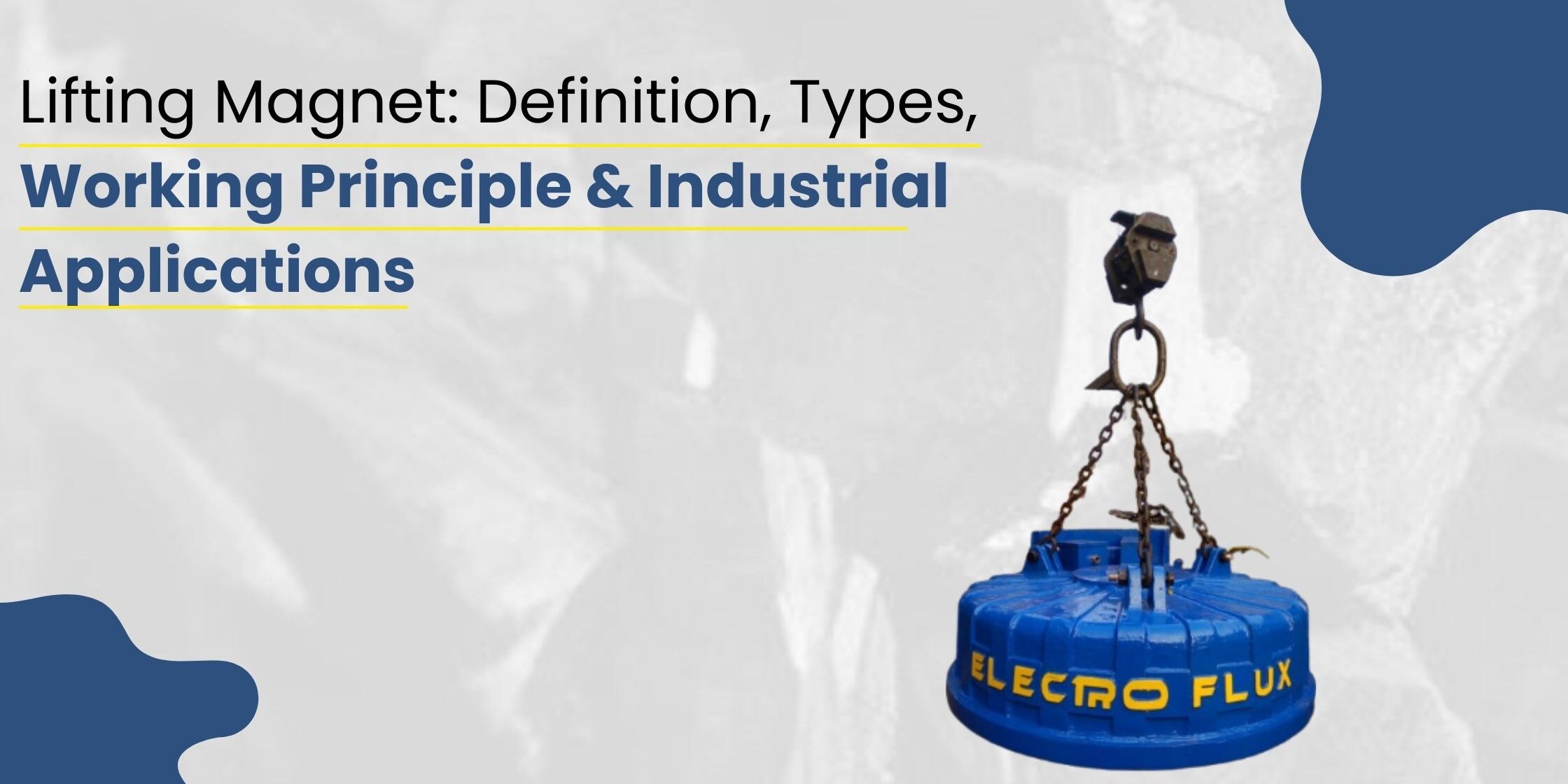
In modern material handling and industrial processing, lifting magnets play a crucial role in moving ferrous materials safely, efficiently, and with minimal manual intervention. From steel plants to recycling yards, these systems have become an essential part of operations where heavy loads must be lifted, transported, and released with precision. Understanding how lifting magnets function, the types available, and where they are used helps industries select the right solution for their operational challenges.
Definition of a Lifting Magnet
A lifting magnet is a magnetic device designed specifically for lifting and handling ferrous materials such as steel plates, billets, scrap, pipes, and cast components. These systems eliminate the need for hooks, chains, or slings, reducing handling time and improving workplace safety. Among the different variants, the lifting electromagnet is widely used in applications that demand controlled and repeatable lifting cycles.
Both permanent and electromagnetic designs fall under the broader category of lifting magnets. However, electromagnetic lifting magnets are particularly valued in industrial environments where on-demand magnetism and load release are essential.
Types of Lifting Magnets
Lifting magnets are available in multiple configurations to suit different material profiles, load weights, and operating conditions.
Electromagnetic Lifting Magnets
Electromagnetic lifting magnets operate using electric current to generate a magnetic field. When power is supplied, the magnet attracts the load; when the power is switched off, the load is released. This controllability makes the lifting electromagnet ideal for automated and high-frequency operations. These systems are commonly used in steel mills, foundries, and ports.
Permanent Lifting Magnets
Permanent lifting magnets rely on a constant magnetic field and are typically operated using a mechanical lever to activate or deactivate the magnetism. While energy-efficient, they offer less flexibility compared to electromagnetic systems, especially for varying load sizes.
Heavy Duty Lifting Magnets
Heavy duty lifting magnets are engineered for extreme industrial conditions where large and irregular ferrous loads must be handled. These magnets feature reinforced construction, high magnetic strength, and robust insulation to withstand heat, dust, and continuous operation.
Excavator and Scrap Lifting Magnets
Often mounted on cranes or excavators, these lifting magnets are used extensively in scrap yards and recycling facilities. Their rugged design supports high-impact environments and frequent load cycles.
Working Principle of Lifting Magnets
The working principle of a lifting electromagnet is based on electromagnetic induction. When electric current flows through a coil wound around a ferromagnetic core, a strong magnetic field is generated. This field magnetises the core, enabling it to attract ferrous materials.
In electromagnetic lifting magnets, the strength of the magnetic field can be controlled by adjusting the current. This allows operators to match lifting force with load requirements, enhancing safety and operational efficiency. Once the current is cut off, the magnetic field collapses, and the load is released instantly.
In contrast, permanent lifter magnet systems use mechanical force to redirect magnetic flux, offering a simpler but less flexible solution.
Industrial Applications of Lifting Magnets
Lifting magnets are widely used across industries where ferrous material handling is integral to operations.
In steel plants and rolling mills, electromagnetic lifting magnets are used to move slabs, plates, coils, and billets during production and storage. Foundries rely on lifting magnets for handling castings and raw materials without damaging surfaces.
In recycling and scrap processing, heavy duty lifting magnets enable fast segregation and transportation of ferrous scrap, improving throughput and reducing manual labour. Power plants, cement plants, and mineral beneficiation units use lifting magnets for equipment maintenance and material movement.
Manufacturing units also deploy lifter magnet systems for loading and unloading machines, positioning workpieces, and streamlining internal logistics. Across these sectors, lifting magnets improve safety, reduce downtime, and increase overall productivity.
Operational Challenges in Industrial Lifting
Despite their benefits, lifting magnet systems must be carefully selected and maintained. Common challenges include inadequate lifting capacity, compatibility issues with existing cranes, excessive heat generation, and inconsistent performance due to poor design or insulation.
Selecting the right electromagnetic lifting magnets involves evaluating load characteristics, duty cycle, ambient conditions, and power availability. Proper engineering ensures long service life and reliable operation, even in demanding industrial environments.
Addressing Industrial Lifting Needs with Electro Flux Equipments Pvt Ltd
Industries facing challenges such as frequent breakdowns, limited customisation, and inconsistent magnetic performance benefit from application-specific solutions. Electro Flux Equipments addresses these issues by designing lifting magnet systems tailored to real-world operating conditions. Their approach focuses on durability, thermal stability, and compatibility with diverse industrial machinery.
By offering engineered solutions rather than standardised products, they help industries achieve safer lifting operations, reduced maintenance requirements, and improved uptime across material handling processes.
Safety and Efficiency Considerations
Safety is a critical factor in lifting operations. Modern electromagnetic lifting magnets incorporate fail-safe features, proper insulation, and controlled power systems to minimise the risk of accidental load drops. Regular inspection, correct installation, and adherence to operational guidelines further enhance safety and reliability.
From an efficiency perspective, lifting magnets reduce handling time, minimise manual intervention, and support automation initiatives. These advantages make both lifter magnet and electromagnetic systems integral to contemporary industrial workflows.
Conclusion
Lifting magnets have transformed the way industries handle heavy ferrous materials by offering controlled, efficient, and safe lifting solutions. From understanding the working principle of a lifting electromagnet to evaluating the role of heavy duty lifting magnets in demanding environments, their importance is evident across sectors such as steel, recycling, power, and manufacturing.
For organisations seeking reliable, well-engineered magnetic lifting solutions that align with complex industrial needs, exploring the capabilities and expertise of Electro Flux Equipments can be a valuable step towards improving operational safety, efficiency, and long-term performance.