



Industrial processors depend on magnetic separation to protect machinery, keep output clean, and meet strict quality rules. However, there are many plants that find it difficult to choose the right system for their layout and type of contamination. A poor selection can lead to weak metal removal, higher maintenance work, and lower plant efficiency.
It is, therefore, significant to comprehend the differences between a magnetic drum separator and an overband separator when planning a new line or modernising an existing one. Although both types of separators are used for the removal of ferrous particles, they operate in different areas and are applied for the solution of different problems. The following sections describe the operation of each separator and the criteria used to select the most appropriate one.
Magnetic Drum Separator Design and Operating Principles
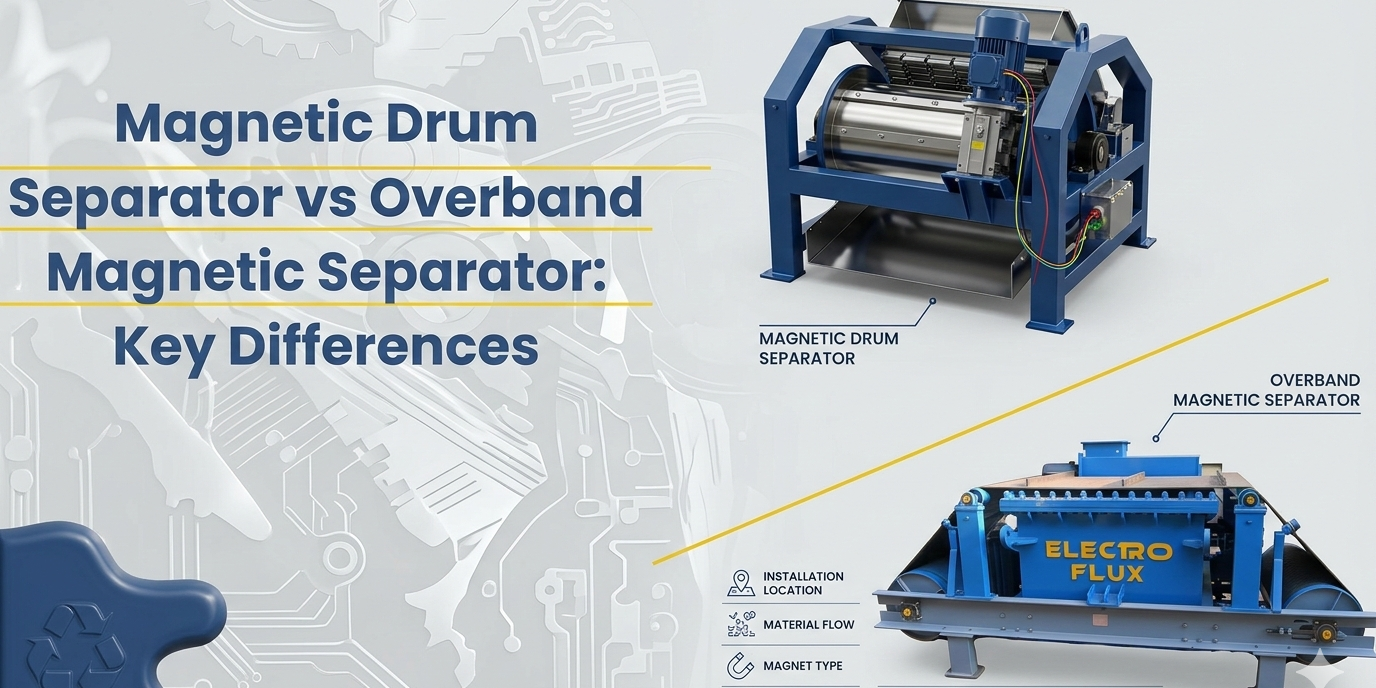
A Magnetic Drum Separator uses a rotating outer shell that surrounds a fixed magnetic core. Material passes directly over the drum surface, where iron particles are pulled toward the shell while non-magnetic material continues forward. As the drum turns past the magnetic zone, the collected metal drops into a separate discharge chute.
These units are usually installed in chutes, feeders, or conveyor discharge points where the material is evenly distributed. The enclosed nature of these units helps to minimise dust and allows for continuous operation in both wet and dry conditions. Drum separators are valued for:
- Stable separation performance
- Simple mechanical layouts
- The ability to handle fine or moderately sized material at high throughput rates
Typical Industrial Applications
In many plants, engineers rely on industrial magnetic separators comparison studies to decide where drum units perform best. They are mostly applied in mineral processing, handling grains, recycling aggregates, and powder production lines. Their controlled discharge paths make them ideal for secondary or polishing processes where high purity is needed, and small pieces of metal need to be consistently captured.
Overband Magnetic Separator Design and Operating Principles
Overband systems are mounted above conveyor belts and create a magnetic field that lifts ferrous objects upward and away from moving material. Instead of sitting inside the product stream, they intercept metal before it reaches crushers, screens, or shredders. Self-cleaning belts or rotating cross-belt assemblies then carry the scrap to the side for discharge.
During an industrial magnetic separators comparison, overband units are usually assigned to early-stage protection roles. They are placed at transfer points or head pulleys where metal exposure is greatest and quick removal prevents serious equipment damage. Adjustable frames let operators change magnet height and position as feed conditions shift.
Typical Industrial Applications
Engineering teams conducting magnetic separator types comparison often specify overband magnets for recycling plants, quarry conveyors, and bulk material systems. They work well at removing large tramp iron pieces. This includes things like bolts, tools, or structural scrap before they reach critical machinery. Their open layout also allows easy inspection and cleaning during routine maintenance.
Key Operational Differences Between Drum and Overband Separators
The difference between magnetic drum and overband separator mainly comes down to placement, operating role, and separation goal. Drum separators sit directly in the material stream. They swiftly get rid of ferrous contaminants as product flows across the rotating shell. Overband units work above belts and focus on removing large or damaging metal early in the process.
Engineers typically evaluate the following technical criteria:
- Installation position within the process line
- Size range of ferrous material captured
- Maintenance requirements
- Role in protecting downstream equipment
Drums usually deliver stronger capture for small particles and controlled discharge into enclosed systems. Overbands are highly effective at protecting crushers and shredders. However, their belt assemblies need regular inspection, which is something to remember to minimise downtime. Many modern plants install both types to create layered separation systems that improve purity while keeping uptime steady across multiple process stages.
Process Positioning and ROI Drivers in Drum vs Overband Installations
When it comes to practical projects, engineers carefully examine how separator location can affect the long-term costs of operations. A Magnetic Drum Separator placed after a screening stage can reduce manual sorting and raise final product purity. On the other hand, an overband magnet installed before a shredder helps limit blade damage and sudden power spikes that can be caused by steel impacts. These location choices directly influence things like:
- Spare-part usage
- Maintenance schedules
- Labour demands over several years
Both systems support steady production and easier maintenance planning if they are positioned correctly. Plants that take time to review belt loading, transfer points, and metal contamination patterns before installation often see quicker payback. Process stoppages are also minimised. This type of careful placement turns magnetic separation from a simple safeguard into a long-term production advantage.
How Electro Flux Equipments Supports Drum and Overband Magnetic Separation Projects
Selecting the appropriate magnetic drum separator manufacturer is as crucial as selecting the separator. Electro Flux Equipments provides drum and overband magnetic separators designed for tough industrial applications, focusing on robust construction, stable magnetic field, and application-oriented engineering.
The company helps customers with equipment sizing, customisation, and technical assistance so that the separators will be in sync with the conveyor speed, material depth, and desired purity. Electro Flux Equipments also focuses on designs that are service-friendly and have a long life so that plants can minimise downtime while maintaining effective metal removal.
Conclusion
With an understanding of the differences between drum and overband systems, processors can design separation layouts that protect equipment, enhance product quality, and manage operating expenses. By considering production requirements, installation constraints, and contamination concerns, purchasing decisions and long-term results can be improved.
With its engineering expertise and diverse product offerings, Electro Flux Equipments remains committed to assisting operators in the industry to set up reliable magnetic solutions for efficient and high-purity processing lines.