


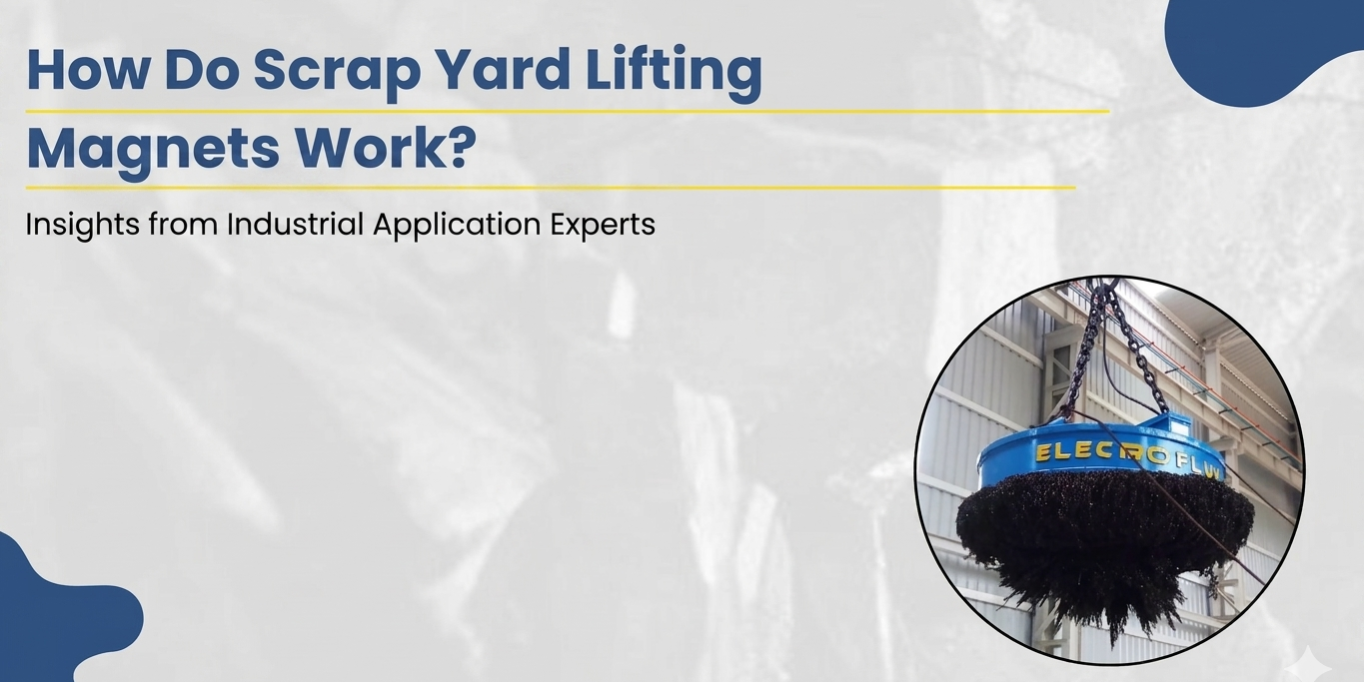
Recycling plants, foundries, mining operations and processing sectors deal with heavy ferrous waste every day, and moving these materials securely requires reliable equipment. Traditional lifting methods are frequently time-consuming and increase the risk of labour. That is why magnetic lifting devices have become an integral aspect of industrial material handling.
A scrap lifting magnet is a valuable tool that helps companies lift, move and separate metal scrap fast while enhancing workplace safety and operational efficiency. A well-designed material lifting magnet will do all of these things. They are frequently utilised due to their ability to accurately and consistently handle uneven metal loads. Understanding how these magnets work helps businesses select the correct equipment for smooth and uninterrupted industrial processes.
Understanding the Basic Working Principle
Most industrial systems use electromagnets, which are powered by electricity. The magnet body consists of a copper coil wound around a metal core. When electric current passes through that coil, a strong magnetic force is created to pull heavy scrap off stacks, conveyors or factory floors.
When the power supply is stopped, the magnetic force disappears, and the metal load is released securely. It’s a regulated procedure that allows industry to handle vast volumes of metal without the need for physical lifting methods.
Main functions of magnetic lifting systems:
-
Lift heavy ferrous scrap safely
-
Reduce manual handling effort
-
Improve loading and unloading speed
-
Support continuous industrial operations
-
Minimise workplace accidents
In large recycling facilities, scrap yard lifting magnets are commonly attached to cranes and excavators to improve operational efficiency and speed up material movement.
Key Components of a Magnetic Lifting System
Every scrap lifting magnet contains several components that help maintain strong and stable performance under demanding industrial conditions. These systems are designed to operate continuously while handling rough and uneven metal scrap.
Important components include:
1. Magnet Housing
The outer body is manufactured using heavy-duty steel to withstand impact, heat and abrasion during industrial use.
2. Copper Coil
The insulated copper winding generates the magnetic field once electrical current flows through it.
3. Power Supply Unit
This component regulates the electrical current needed for stable magnetic performance.
4. Control Panel
Operators use the control system to activate and deactivate the magnetic field during lifting operations.
5. Battery Backup System
Some advanced models include backup systems that prevent accidental load dropping during power failure situations.
Many industries integrate these systems with other forms of magnetic material handling equipment to improve sorting, lifting and transportation efficiency across the production line.
Industries That Use Magnetic Lifting Equipment
Magnetic lifting systems are widely utilised in several industrial sectors; they make metal handling easier and increase operational safety at the same time.
Common industries using these systems:
-
Recycling and scrap processing plants
-
Coal and mining industries
-
Cement manufacturing units
-
Steel plants and foundries
-
Food processing industries
-
Heavy engineering facilities
-
Waste management plants
Magnetic lifting devices have great significance in recycling businesses as they enable the separation of ferrous scrap from mixed waste streams before processing. Foundries employ these systems to safely transport castings and raw metal materials throughout the production floor.
In demanding industrial environments, a reliable scrap magnet helps maintain productivity while reducing downtime caused by inefficient material handling methods.
Factors That Affect Magnet Performance
The performance of the scrap lifting magnet is affected by many operating and environmental factors. Grasping these variables assists industries in staying efficient and avoiding unwanted interruptions.
Key performance factors:
1. Type of Metal
Ferrous metals such as steel and iron respond strongly to magnetic force, while non-ferrous materials do not.
2. Size and Thickness
Larger and thicker metal pieces require a stronger magnetic force for safe lifting.
3. Surface Condition
Rust, dirt and uneven surfaces can reduce magnetic contact and affect lifting strength.
4. Temperature Conditions
Extremely high temperatures may reduce magnetic efficiency if proper insulation and cooling systems are not present.
5. Stable Power Supply
A consistent electrical supply is necessary for maintaining lifting strength during continuous operation.
Many industrial facilities combine lifting systems with other forms of industrial lifting magnets to manage different types of materials across varied production environments.
Importance of Safety and Maintenance
Proper safety measures are usually necessary for industrial lifting operations. Regular inspection and preventative maintenance help to reduce the risk of operations and prolong the life of equipment.
Essential maintenance practices:
-
Clean the magnet surface regularly
-
Inspect electrical cables for wear
-
Check control systems before operation
-
Monitor lifting capacity performance
-
Replace damaged insulation immediately
Operators should also receive proper training for safe load handling and equipment operation. Facilities using magnetic material handling equipment often follow scheduled maintenance programmes to maintain reliable performance and minimise production delays.
Electro Flux Equipments: Powering Smarter and Safer Scrap Handling Operations
Electro Flux Equipments is known for providing dependable magnetic lifting solutions for recycling plants, foundries, mining plants and processing industries.
The company is committed to producing rugged systems that aid in effective scrap handling and ensure operational safety. Their industrial lifting magnets are built to operate reliably in continuous industrial applications where durability and lifting power are required.
Electro Flux Equipments has real industrial experience and a keen focus on engineering quality. The company continues to serve industries in need of reliable magnetic lifting systems for heavy duty applications.
Conclusion
Scrap lifting magnet makes handling of ferrous items easy and enhance operational efficiency, ultimately lowering the dangers associated with manual human labour. From recycling plants to mining operations and foundries, a scrap magnet is essential to keep efficient industrial workflows.
Industries may improve safety, reduce downtime and boost long-term operational efficiency by using reliable lifting equipment from a supplier like Electro Flux Equipments, offering durable and high-performing magnetic lifting solutions for harsh industrial situations.