


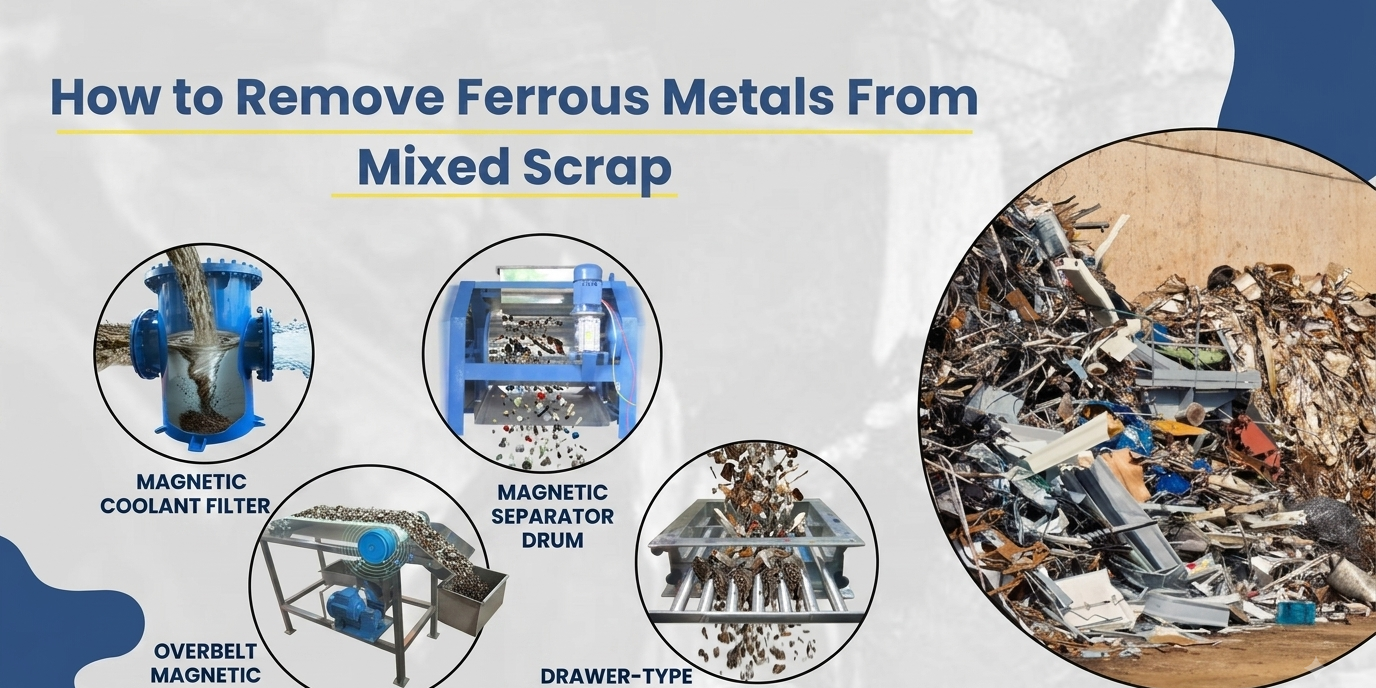
Mixed scrap is rarely made up of one material. A single load can include steel, cast iron, aluminium, copper, plastics, rubber and other waste materials. It takes more than a magnet over a conveyor to recover precious ferrous metals from this mixture. It’s a step-wise procedure, where each step makes the material more amenable to accurate separation.
A well-designed processing line with the correct ferrous metal separator helps recycling plants, foundries, manufacturing facilities and scrap processors to increase recovery rates, safeguard downstream equipment and generate cleaner recyclable materials with better economic value.
This article describes each step in the process, from preparing mixed scrap to choosing the correct separation equipment for optimum ferrous metal recovery.
Understanding the Challenge of Mixed Scrap
Mixed scrap is produced from a variety of sources including manufacturing refuse, construction and demolition trash, end-of-life vehicles and municipal recycling facilities. Each batch is different in composition, size and amount of contamination.
Without adequate separation, important ferrous metals are typically lost with the non-metallic trash or mixed with non-ferrous products. This makes recycling less effective and raises the cost of processing. A rigorous separation technique ensures the recovery of each stream as cleanly as feasible.
Step 1: Inspect and Prepare the Incoming Scrap
The first step in any successful separation process is an evaluation of the incoming material.
Operators visually scan the scrap for big parts, hazardous materials, excessive dirt and bulky items that may damage the processing equipment. Often at this stage, apparent impurities such as lumber, concrete or large plastic pieces are removed by hand.
Knowing the composition of the incoming scrap helps to decide the most suitable metal separation equipment. Scrap from a fabrication shop is not the same as demolition debris or automobile scrap, and the processing line must be tailored to the material being processed.
Step 2: Reduce the Material Size
Big chunks of scrap are hard to sort well, as the different materials stick together. Shredders, crushers or shearing machines break the material down into smaller, more homogeneous bits. It exposes the hidden steel parts and ensures a steady supply to downstream equipment.
For example, an old electric motor has a steel housing, copper windings, aluminium parts and insulation materials. Shredding isolates these components to the extent that they can be recovered individually in later steps.
Uniform particle size also improves the performance of conveyors and allows separation equipment to work more correctly.
Step 3: Screen and Classify the Material
After shredding, the material passes through screening equipment that separates it according to particle size. Fine particles, medium-sized scrap, and oversized material are processed independently because each fraction responds differently during separation.
Screening offers several advantages:
- Removes dust and fines that reduce separation efficiency.
- Prevents oversized pieces from obstructing conveyors.
- Creates a more consistent material flow.
- Improves the performance of downstream equipment.
By preparing the material properly, this stage increases the effectiveness of the entire recycling process.
Step 4: Remove Ferrous Metals Using a Ferrous Metal Separator
This is the core stage of the process. As the prepared material moves along a conveyor, a ferrous metal separator generates a magnetic field that attracts iron and carbon steel while allowing non-magnetic materials to continue through the production line.
Depending on plant requirements, operators can install suspension electromagnets over conveyors, magnetic drum separators within the processing line or magnetic head pulleys at conveyor discharge sites. Magnetic separator selection is influenced by throughput, material size, conveyor configuration and degree of contamination.
At the end of this stage, most ferrous metals have been removed automatically, reducing manual sorting and improving recovery efficiency.
Step 5: Separate the Remaining Materials
Once steel and iron have been removed, the remaining material still contains valuable resources. Additional equipment is used to separate non-ferrous metals and lightweight materials.
Typical processes include:
- Eddy current separators for aluminium and other non-ferrous metals.
- Air classifiers for plastics, paper, and light contaminants.
- Optical sorting systems for specialised recycling applications.
- Density-based separation where required.
This staged approach produces cleaner material streams while increasing the value of recovered products.
Step 6: Inspect and Process the Recovered Ferrous Metals
Recovered steel is inspected before leaving the processing line. Operators inspect for excessive contamination, remaining non-ferrous materials and material consistency. Depending on needs, the recovered metal is subsequently compacted, baled or sent directly to steel mills and foundries for recycling.
High-quality scrap metal separation improves the resale value of recycled steel while reducing the need for additional processing further down the supply chain.
Selecting the Right Magnetic Separator Equipment
The performance of any separation system depends on selecting equipment that matches the material being processed. Before investing in metal recycling equipment, businesses should evaluate their operating conditions rather than focusing solely on magnetic strength or equipment size.
Key considerations include:
1. Type of Scrap
Manufacturing scrap, demolition waste, municipal solid waste, and automotive scrap are diverse in terms of material composition. The separator should be suited to the particular scrap stream.
2. Processing Capacity
The equipment must be able to manage the needed throughput without introducing bottlenecks. In high-volume operations, continuous magnetic separation devices are commonly included in conveyor lines.
3. Material Size and Feed Characteristics
The separation performance is affected by size, shape and depth of the material on the conveyor. Shredded material is often easier to handle than bulky or uneven scrap.
4. Plant Layout and Installation
When picking a separator, you should consider available space, the arrangement of your conveyors and the position of existing equipment. A highly integrated system enhances workflow and lowers installation issues.
Choosing a scrap sorting machine based on these operational requirements helps create a more efficient scrap processing line while delivering consistent ferrous metal recovery over the long term.
Electro Flux Equipments: Supporting Efficient Ferrous Metal Recovery
No two scrap processing operations are run under identical conditions. The design of a magnetic separation system is influenced by various factors such as material composition, manufacturing capacity, space available, process flow, etc.
Electro Flux Equipments develops solutions tailored to these different requirements, drawing on decades of experience in steel plants, recycling facilities, mining operations, ports, foundries and heavy engineering sectors. Its offering comprises suspension electromagnets, magnetic drum separators, magnetic head pulleys and other specialised magnetic systems designed for continuous industrial use.
Matching equipment selection to the operational objectives of each plant, the business delivers dependable separation performance, enhanced ferrous metal recovery and reliable operation in high throughput conditions.
Conclusion
The separation of ferrous metals from mixed scrap is a multi-step process, starting with the preparation of the material and ending with the recovery of the steel in a clean and recyclable form. Shredding, screening, magnetic separation and quality inspection all play a vital role in accomplishing the efficient processing of scrap.
The magnetic separator is an important part of the operation, but the greatest results are achieved when it is used in conjunction with adequate metal separation equipment and a well-designed processing line.
Choosing the proper ferrous metal separator and the correct manufacturer, such as Electro Flux Equipments, may assist recycling and manufacturing organisations in maximising their material recovery, enhancing operational efficiency and generating better quality recycled metals.