


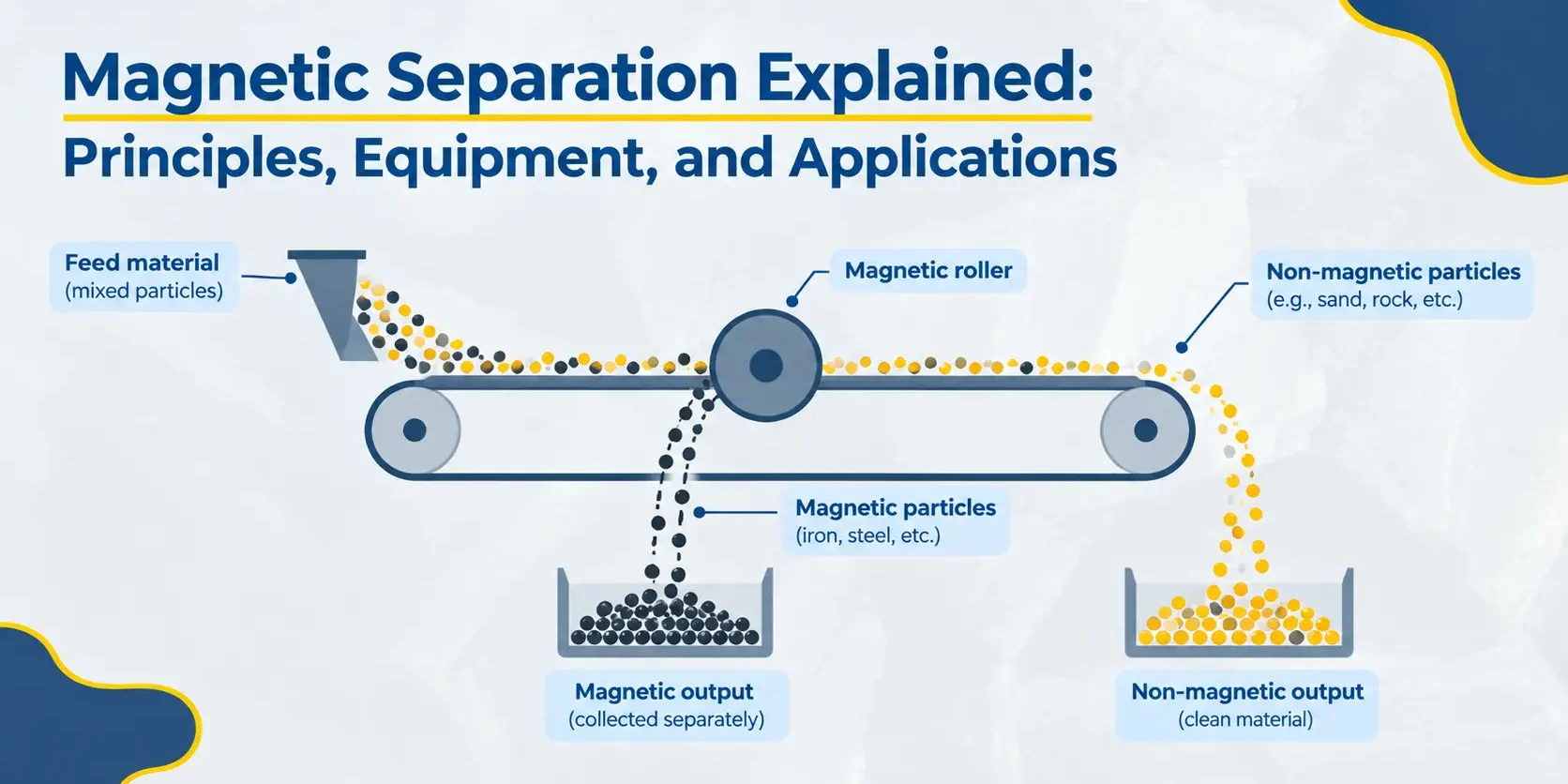
In industrial applications where bulk material is handled on a daily basis, there are several stages of processing, such as material separation. For material separation, most applications use magnetic separator technology.
Magnetic separation is a widely used method for removing ferrous (iron and steel) particles from raw materials and industrial product streams. This method uses magnetic force to attract iron and other magnetic contaminants while allowing non-magnetic materials to continue flowing.
In this guide, let’s learn in detail about magnetic separation, its working principle, equipment, and applications.
What Is Magnetic Separation?
Magnetic separation is a process in which a magnetic field is used to separate ferrous materials from non-magnetic materials.
This process is performed through a magnetic separator, which generates a magnetic field to attract the metal material to itself, while letting the other material pass through. This process can be used with dry bulk materials, conveyor streams, liquids, slurries, powders, and other industrial materials too.
The Principles Behind Magnetic Separation
The basic working principle behind a magnetic separation machine is the attraction between a magnetic field and ferrousmagnetic materials.
These magnetic separators create magnetic fields to attract ferrous particles from the surrounding material. The efficiency of this separation depends on several factors, such as:
- Magnetic strength: Stronger magnetic fields can help capture smaller or less strongly magnetic particles.
- Material characteristics: Particle size, density, moisture, and physical form affect how efficiently they will be attracted to the magnetic field and how easily contaminants can be captured.
- Burden depth: This burden depth is a factor when a deep layer of material can make it difficult for the magnetic field to reach particles located underneath.
- Feed rate: The amount and speed of material passing through the separator affect the required equipment size and configuration.
- Installation arrangement: Overhead, inline, cross-belt, drum, roll, and pipeline arrangements provide different separation conditions.
Common Types of Magnetic Separation Equipment
There are different types of metal sorting equipment developed for different material conditions and process layouts:
-
Overband Magnetic Separators
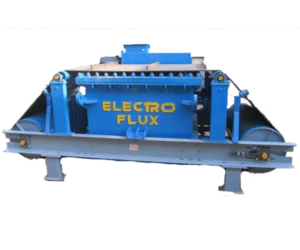
Overband magnetic separators are positioned above conveyor systems to capture ferrous particles from moving material streams. They can be configured in inline or cross-belt arrangements depending on the conveyor layout.
-
Magnetic Drum Separators
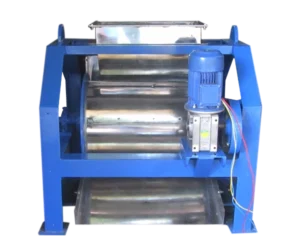
Magnetic drum separators use a rotating drum with a magnetic system; they don’t use a gravity separation method to continuously remove ferrous particles from dry, free-flowing materials.
These separators create a magnetic field; as material passes over the rotating drum, magnetic particles are attracted and carried away from the main material flow, while non-magnetic material follows a different path.
-
Magnetic Roll Separators
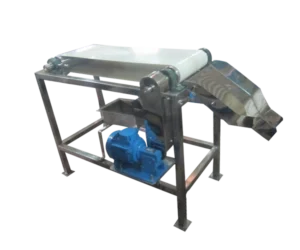
Magnetic roll separators use rotating magnetic rollers to extract ferrous particles from a material stream. Their compact design allows them to be integrated into existing processing or conveyor systems where space may be limited.
-
Magnetic Grills and Housing
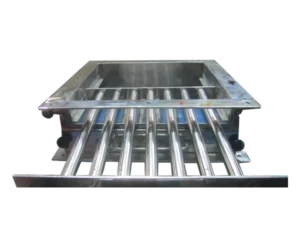
Magnetic grills and housing systems are also a type of magnetic separator machine; they use a magnetic grid inside a protective housing to capture ferrous contaminants from materials passing through the unit.
-
Liquid Line Magnetic Separators
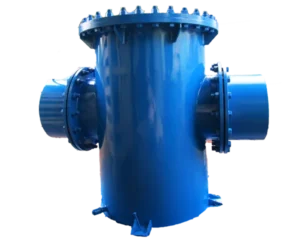
Liquid line magnetic separators are installed directly into liquid-processing pipelines. They are designed to capture ferrous particles from liquids and slurries before they reach pumps, valves, or other processing equipment.
Industrial Applications of Magnetic Separation
There are several applications that use a magnetic separation diagram; some of these industries are:
-
Mining and Mineral Processing
Mining and mineral-processing operations handle large quantities of ore, minerals, and other bulk materials. Magnetic separators can help recover iron-containing materials and separate magnetic particles from mineral streams.
-
Recycling and Waste Management
Recycling facilities often process mixed material streams containing iron and steel. Magnetic separation can continuously extract ferrous materials from these streams, helping recover valuable metals and prepare remaining materials for further processing.
-
Food and Pharmaceutical Production
Food and pharmaceutical processes require careful control of unwanted metal contamination. Magnetic separators can capture ferrous particles from powders, granules, and other product streams.
In these applications, a magnetic separation method can support product purity while helping protect processing equipment from metal contamination.
-
Cement and Aggregate Production
Cement and aggregate operations handle abrasive bulk materials that can contain unwanted iron and steel pieces. Magnetic separators can remove tramp metal from material streams before it reaches crushers, grinders, or other equipment.
-
Plastics and Ceramics Manufacturing
Plastic and ceramic manufacturing processes may involve powders, granules, or other bulk materials that require protection from ferrous contamination.
The magnetic separation process can be incorporated into these processing lines to capture unwanted iron particles and help maintain material quality.
Magnetic Separation Solutions from Electro Flux Equipments
At Electro Flux Equipments, we bring high-quality industrial equipment, robustly constructed and customised. Our product range includes the metal sorting machine, magnetic drum separators, magnetic roll separators, magnetic grill and housing systems, and liquid line magnetic separators.
We also supply other vibratory equipment and spare parts and accessories. Furthermore, we take our services beyond the supply of the product by offering step-by-step guidance, installation support, and after-sales services.
Conclusion
Magnetic separation performed by a reliable magnetic separator machine is an efficient way to remove ferrous contaminants and recover magnetic materials from industrial processes.
However, to select the right separator, there are some considerations one must go through, such as the material type, particle characteristics, feed rate, required magnetic strength, burden depth, and installation environment.
Get in touch with us at Electro Flux Equipments to receive equipment that suits your needs and meets your working environment conditions.