


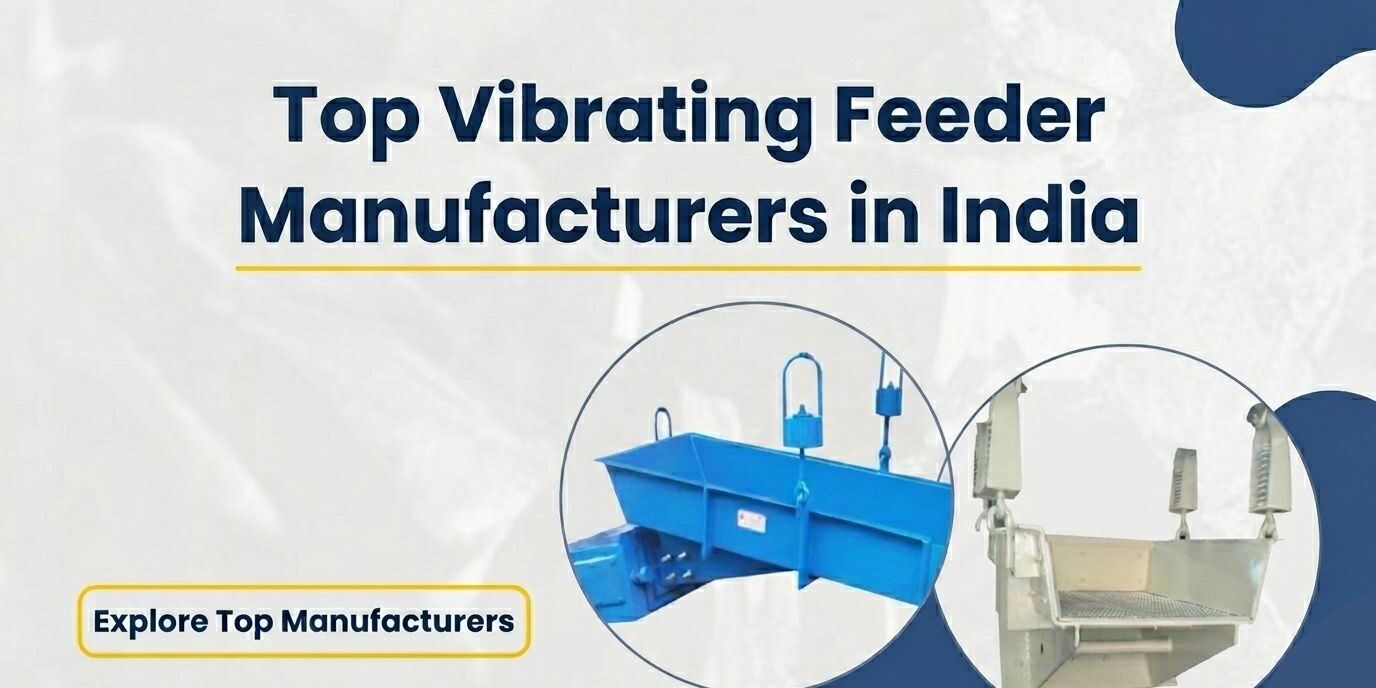
When it comes to material handling and bulk processing, consistency beats speed. A badly calibrated feed system can impede output, incur material loss and cause unnecessary maintenance problems. That’s why companies spend considerable time assessing vibrating feeder manufacturers before making a purchase decision.
Demand for reliable vibrating feeder systems continues to increase in mining, cement, food processing, recycling, steel and chemical sectors. Indian manufacturers have developed a reputation, in particular, for supplying long-lasting and application-specific equipment at low prices.
But picking the correct provider is not just a matter of comparing product catalogues. Buyers must consider engineering capability, dependability, service support and long term operational performance.
Understanding the Role of a Vibrating Feeder
A vibrating feeder is used to feed bulk material consistently to the processing machines. Unlike traditional conveying systems, it controls feed rates accurately. This is important in businesses where the balance of the processes has an impact on output and the life of the machinery directly.
These systems are often installed beneath hoppers, crushers, and storage bins. They can process minerals, coal, aggregates, powders, food grains or recycled materials, depending on the application.
Most companies use vibrating feeders for three practical reasons:
-
Controlled material flow
-
Reduced manual handling
-
Improved production stability
In many processes, the feeder is the first control point of the process. When feed rates become erratic, downstream equipment is often subjected to overloads or unequal performance.
What Most Buyers Often Overlook
Procurement teams often focus on the upfront pricing. But experienced plant managers typically evaluate equipment in terms of lifecycle performance, not just first cost.
The difference between ordinary and quality vibratory feeder manufacturers usually shows up after months of non-stop operation.
1. Structural Strength and Fabrication
Industrial feeders are under constant vibration stress. Poorly made ones can have cracked frames, uneven feeding, or motor breakdowns too soon.
Well-designed feeders generally include:
-
Reinforced trough construction
-
Balanced vibration systems
-
Heavy-duty springs and liners
-
Corrosion-resistant finishing
For abrasive industries such as mining and foundries, wear resistance becomes especially important.
2. Application Engineering
Not every material behaves the same way. Limestone, fly ash, sand, and metal scrap all require different feed characteristics.
Experienced vibrating feeder suppliers analyse factors such as:
-
Material density
-
Moisture content
-
Lump size
-
Flow behaviour
-
Required throughput
Suppliers offering customised engineering support often deliver better long-term value than those supplying only standard models.
3. Spare Parts and Service Support
Downtime can become expensive very quickly in industrial environments. A delayed spare part may stop production for days. This is one reason many businesses prefer working with vibrating feeder suppliers in India that provide local service support and quicker spare availability.
Industries Driving Vibrating Feeder Demand in India
As industries are expanding, the need for automated material handling systems in India is increasing. Vibratory feeder manufacturers today serve a wide range of industries.
1. Mining and Quarry Operations
In mining facilities, feeders control the flow of material to crushers and screen equipment. They are built for tough situations, and they need to be tough themselves to withstand rough impact and dust. Vibrating feeders help reduce abrupt load surges that might harm crushing equipment.
2. Cement and Construction Materials
For blending and grinding processes in cement plants, the feeding of material should be uniform. Small differences in feed rates can play a role in energy efficiency and industrial output. Many facilities prefer variable speed feeder systems because they allow more operational control.
3. Food and Pharmaceutical Processing
In hygienic industries, stainless steel vibrating feeders are widely used for accurate dosing and gentle material handling. Easy cleaning, low noise levels, and contamination control are major priorities in these sectors.
Why India Has Become a Major Manufacturing Hub
Several vibrating feeder manufacturers in India have strengthened their foothold in domestic as well as foreign markets over the past decade.
One big reason is cost efficiency. Indian manufacturers also offer industrial-grade equipment at more affordable investment prices than imported products.
Another benefit is flexibility in engineering. Now, many Indian manufacturers build systems on the basis of plant layouts, throughput needs and material qualities rather than on conventional models.
Another benefit of local sourcing is that it minimises lead times, which is particularly significant for companies working with tight project schedules.
Key Features to Evaluate Before Purchase
Selecting the right feeder depends heavily on operating conditions. However, certain features consistently indicate better engineering quality.
1. Adjustable Feed Control
Production requirements can change frequently. Feeders with adjustable vibration intensity help operators maintain stable process flow during varying load conditions.
2. Energy Efficiency
Modern feeder systems are designed to minimise power consumption while maintaining consistent throughput. In continuous-process industries, this contributes directly to lower operating costs.
3. Low Maintenance Design
Reliable vibratory feeder manufacturers focus on simplified maintenance access. Easy replacement of motors, liners, and springs reduces servicing downtime significantly.
4. Automation Compatibility
As industries move towards automated production, compatibility with PLC and control systems has become increasingly important. Buyers should confirm integration capabilities during the evaluation stage.
Why Electro Flux Equipments is the Best Vibrating Feeder Manufacturer in India
Electro Flux Equipments has made a name as a trusted supplier in the material handling business by providing long-lasting and performance-driven solutions for the mining, foundry, recycling, and bulk material processing sectors. The company’s application-specific engineering focuses on creating vibrating feeders based on material qualities, manufacturing capacity and operating conditions, rather than generic solutions.
This practical strategy helps enterprises achieve better material flow, less downtime and improved operational efficiency. With robust manufacturing knowledge and a commitment to constant performance, Electro Flux Equipments continues to gain the trust of organisations throughout tough industrial situations.
Conclusion
Selecting the perfect vibrating feeder is more than just comparing pricing or specs. Industrial purchasers should consider factors including reliability, maintenance requirements, engineering capability and after-sales assistance before picking a supplier. With industries turning to automation, it is crucial to find trustworthy vibrating feeder manufacturers to ensure smooth production and less downtime.
When it comes to choosing among the vibrating feeder providers in India, organisations often select reputed companies like Electro Flux Equipments, which can provide them with practical engineering knowledge, durable equipment and dependable long-term operational assistance in challenging industrial conditions.