


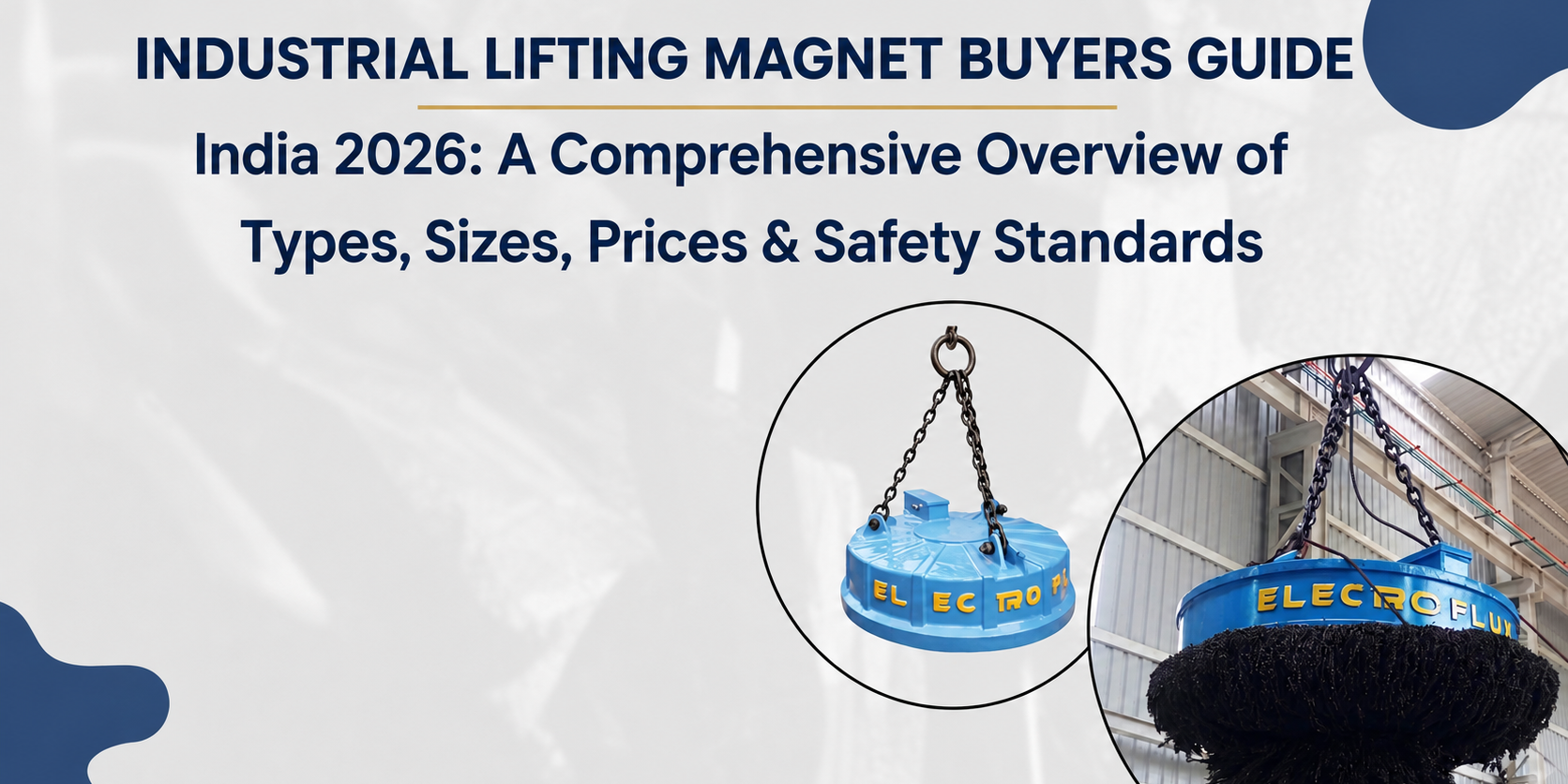
Industrial lifting is becoming faster, safer and more efficient, and the correct lifting equipment is becoming a crucial investment for manufacturers and material handling companies. Whether you’re moving steel plates, billets, coils or scrap metal, the right electro lifting magnet can help enhance productivity, eliminate manual handling and support safer working practices.
But the market offers numerous types of magnets, varied capacities, safety standards and price ranges, and the choice of the most suitable solution is not always easy. This buyer’s guide covers the main issues Industries should consider in 2026, including types of lifting magnets, sizing, cost, and safety regulations, to enable them to make a practical and informed purchase decision.
Understanding Industrial Lifting Magnets
An industrial lifting magnet is a device that employs magnetism to lift and handle metallic objects. Lifting magnets are widely used in cranes, gantries, hoists and automated handling equipment.
Magnetic lifting systems can grab steel components swiftly and efficiently, without the need for chains, hooks or slings, which are required in traditional lifting methods. This minimises loading time and surface flaws in completed items.
Industries that use lifting magnets:
-
Production of steel
-
Metal fabrication
-
Foundries
-
Shipbuilding
-
Automotive manufacturing
-
Rail infrastructure projects
-
Scrap recycling facilities
The type of magnet depends on the material to be handled, the environment in which it operates, the frequency of lifting and the load capacity required.
Types of Lifting Magnets Available in India
Understanding the major categories helps buyers narrow down suitable options before requesting quotations from lifting magnet manufacturers.
1. Electro Lifting Magnets
The electro lifting magnet remains one of the most widely used solutions in heavy industrial environments. These magnets generate magnetic force through an electrical current supplied to a coil. When power is activated, the magnet attracts ferrous materials; when power is switched off, the load is released.
Common applications include:
-
Steel plate handling
-
Billet transportation
-
Slab movement
-
Scrap yard operations
-
Coil handling
Electromagnets are preferred where high lifting capacities and continuous operation are required.
2. Permanent Lifting Magnets
Permanent magnets can work without an external power supply. They are commonly utilised in smaller workshops, machine shops and fabrication facilities where moderate lifting needs and ease of operation are crucial.
Advantages include:
-
No electricity consumption
-
Lower maintenance requirements
-
Portable operation
-
Reliable holding force
However, they are generally less suitable for extremely heavy industrial loads.
3. Battery-Powered Magnetic Lifters
These systems combine magnetic lifting technology with rechargeable power sources. They provide flexibility in locations where a constant electrical connection is not practical and are increasingly being adopted in mobile maintenance and field operations.
Choosing the Correct Size and Capacity
One of the most common purchasing mistakes is selecting a magnet based solely on the maximum rated lifting capacity. In reality, magnet performance depends on several operational factors.
1. Material Thickness
Thicker steel means a better magnetic circuit and helps the magnet to achieve higher levels of its claimed capacity. Thin sheets, on the other hand, reduce the magnetic efficiency and require additional safety margins.
2. Surface Condition
Rust, scale, paint, dirt, and uneven surfaces can significantly affect lifting performance. For example, a magnet rated for a clean steel plate may perform differently when handling heavily oxidised scrap material.
3. Shape and Contact Area
Flat plates will normally give better magnetic contact than irregular pieces, castings, pipelines or structural parts. When considering capacity, buyers should look at the real geometry of materials handled on site, not just catalogue numbers.
4. Duty Cycle Requirements
A factory that operates round-the-clock on many shifts would require a different specification than a workshop which performs lifting activities occasionally. High-duty operations usually require high insulation of coils, rugged construction, and proper heat dissipation.
Understanding Lifting Magnet Price Factors
Many buyers initially compare quotations based only on the advertised lifting magnet price. However, purchase cost represents only one part of the overall investment.
Several factors influence pricing:
1. Capacity
Higher lifting capacities require larger magnetic assemblies and more robust construction, increasing overall cost.
2. Application Type
Magnets designed for scrap handling typically differ from those intended for steel plates, coils, or billets. Specialised applications often require customised engineering.
3. Power System
Electromagnets may require control panels, rectifiers, backup systems, and additional safety mechanisms. These components affect the final project cost.
4. Build Quality
Industrial-grade devices built for rugged operating settings usually need a greater upfront investment but tend to provide lower lifecycle expenses.
Procurement teams should evaluate:
-
Expected service life
-
Maintenance requirements
-
Energy consumption
-
Spare parts availability
-
Technical support
The lowest upfront price does not always provide the best long-term value.
Safety Standards and Compliance Considerations
Safety is one of the main considerations during industrial lifting processes. An inefficient lifting process may lead to equipment damage, production interruptions, and injuries in the workplace.
1. Load Testing and Certification
Reputable lifting magnet suppliers typically provide load testing documentation and performance verification before dispatch.
Buyers should request:
-
Factory test reports
-
Load capacity certificates
-
Inspection records
-
Quality assurance documentation
2. Electrical Protection
For electromagnetic systems, proper protection against power interruptions is essential. Many facilities utilise backup power arrangements or battery-assisted release prevention systems to minimise risk during unexpected outages.
3. Inspection Procedures
Routine inspection schedules should include:
-
Coil condition checks
-
Cable inspection
-
Surface wear assessment
-
Electrical connection verification
-
Load holding tests
Regular inspections help maintain safe operation and extend equipment lifespan.
4. Compliance with Industry Practices
Buyers should ensure that their equipment conforms to applicable industrial lifting practices, workplace safety rules and internal plant standards, although exact criteria will vary depending on the application.
What to Ask Lifting Magnet Manufacturers Before Buying
Before finalising a purchase, procurement teams should engage suppliers with practical operational questions.
Key areas to discuss include:
-
Rated capacity under actual operating conditions
-
Material types the magnet will handle
-
Duty cycle limitations
-
Power consumption requirements
-
Maintenance recommendations
-
Spare parts availability
-
Installation support
-
Warranty coverage
Experienced lifting magnet manufacturers will usually ask specific application questions before offering a solution to avoid improper or unsuitable equipment.
Why Many Industrial Buyers Trust Electro Flux Equipments
When investing in industrial lifting equipment, hiring an experienced supplier can make a big impact. Electro Flux Equipments have gained competence in magnetic lifting and material handling solutions for steel, fabrication, manufacturing and heavy engineering industries. The organisation is dedicated to meeting genuine operational needs and offering solutions that are customised to tough industrial conditions.
Electro Flux Equipments provides top-notch equipment, technical assistance, application advice, and after-sales services. This realistic approach assists organisations in improving material handling efficiencies, making their workplace safer, and ensuring consistent performance of their lifting magnets.
Conclusion
Choosing the proper heavy duty lifting magnet is much more than just comparing capabilities or taking the cheapest quote. Buyers should take into account the features of the material, frequency of lifting, the working circumstances, the safety requirements and the costs of long-term ownership.
Whether buying an electro lifting magnet for steel treatment or looking at specific choices for manufacturing and recycling operations, a robust procurement process mitigates risks and improves efficiency. Armed with knowledge about magnet classifications, sizing, pricing and safety regulations, industry experts will be able to make informed choices that will benefit their businesses far into the future, well beyond 2026.