


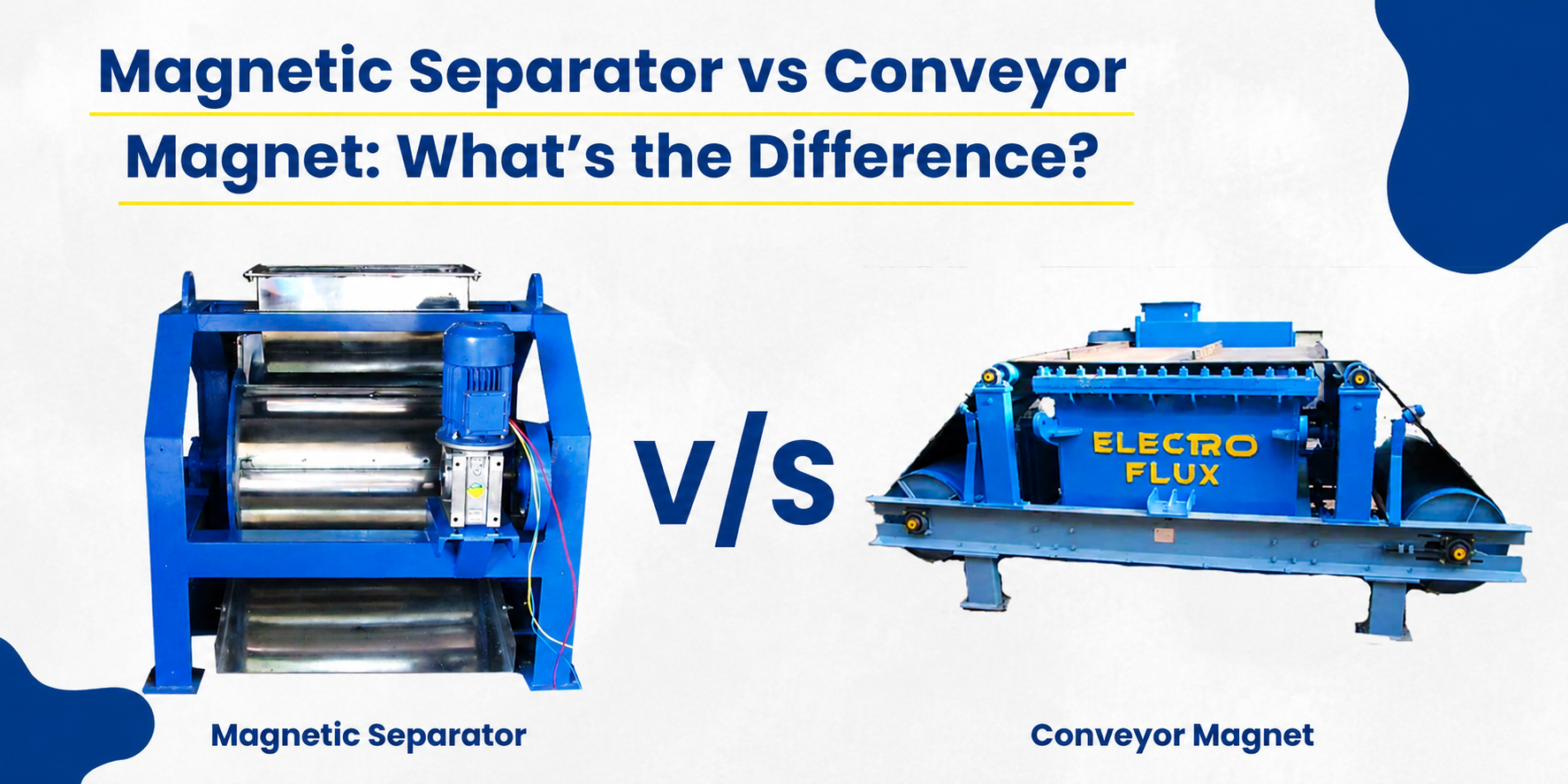
Material contamination is one of the biggest causes of equipment damage, product rejection and unexpected downtime in the manufacturing and bulk material handling industries. Removing unwanted ferrous particles at the right stage has a measurable impact on plant performance, whether the plant processes minerals, coal, cement, aggregates, recycling or food-grade components.
When comparing a magnetic separator vs conveyor magnet, a lot of purchasers think they do the same job. They have a common goal, but they differ greatly in their functioning principles, installation and uses. Wrong solutions often lead to reduced recovery rates or unwarranted investment. Knowing where each system excels will enable procurement teams and plant managers to make smart decisions that will improve the reliability of the entire production line.
Understanding a Magnetic Separator
A magnetic separator is used to separate ferrous impurities from bulk materials by generating a regulated magnetic field. Depending on the application, the separator can use permanent magnets or electromagnets, which will attract and hold the undesirable metal while the rest of the material moves on. These systems are widely used in mining, cement plants, recycling facilities, ceramics, power generation, and chemical processing.
Unlike basic magnetic devices, many industrial separation systems are designed to recover both large tramp metal and fine iron particles. Modern electromagnetic separators typically operate with magnetic field strengths between 1,000 and 6,000 Gauss, depending on the material characteristics and contamination level. This allows efficient removal without interrupting production.
What Is a Conveyor Magnet?
A Conveyor Magnet is installed directly above or around a conveyor belt to remove ferrous materials while products remain in motion. Rather than processing material inside an enclosed magnetic system, it captures unwanted metal from the moving material stream.
The most common example is the overband magnet, which is suspended above the conveyor. As material passes beneath, ferrous objects are attracted to the magnetic surface and discharged away from the product flow through either manual or automatic cleaning mechanisms.
Because installation is relatively straightforward, conveyor magnets are widely used in recycling plants, quarry operations, ports, waste processing facilities, and aggregate handling systems where continuous production is essential.
Magnetic Separator vs Conveyor Magnet: Key Differences
Although both systems remove iron contamination, their roles within a processing line are different.
1. Installation Position
Magnetic separators are generally incorporated into the material handling process itself, often within chutes, pipelines, drums or enclosed conveying systems.
The conveyor magnet is installed above or around the existing conveyor belt. This allows for easier retrofitting of the magnet into operating factories without major structural alterations.
2. Method of Separation
Magnetic separators process material directly through the magnetic field, enabling precise separation of fine and coarse ferrous contaminants.
A conveyor magnet removes metal from the moving material stream while products continue travelling on the belt, making it ideal for continuous operations.
3. Suitable Applications
Generally, a magnetic separator is preferred where product purity is crucial or where finer contamination has to be removed.
Conveyor magnets are more typically used to protect crushers, shredders, mills and downstream processing equipment against tramp metal damage.
Where an Overband Magnet Fits In
An overband magnet is one of the most widely used conveyor-based magnetic solutions because it combines simplicity with reliable performance.
Typical applications include:
- Coal handling plants
- Mining operations
- Cement manufacturing
- Construction and demolition waste
- Scrap recycling facilities
Since the magnet continuously removes unwanted iron from the conveyor belt, maintenance requirements remain relatively low while equipment protection improves considerably.
Choosing the Right Industrial Separation Equipment
Selecting suitable industrial separation equipment involves more than comparing magnet strength. Several operational factors should be evaluated before making a purchasing decision.
1. Material Characteristics
Bulk density, moisture content, particle size distribution, and material flow all influence magnetic performance. Fine powders often require different solutions from coarse aggregates or shredded scrap.
2. Conveyor Speed
High belt speeds reduce the exposure time between the material and magnetic field. This affects the efficiency of ferrous recovery and should be considered during system design.
3. Type of Contamination
Some facilities need occasional tramp metal removal, while others require continuous extraction of fine iron particles throughout production. The contamination profile determines whether a magnetic separator or conveyor-mounted system offers better results.
4. Maintenance Requirements
Electromagnetic systems need power and occasional inspection while permanent magnetic solutions typically require less maintenance. The optimum balance will rely on operational requirements and plant infrastructure.
Practical Examples of Magnetic Separation Equipment
Take the case of a cement manufacturing plant where limestone is carried to the crusher. Steel particles that might enter the crusher will damage valuable equipment. Placing a conveyor magnet before the crusher ensures that such contaminants are removed.
Now consider a ceramic manufacturing plant producing high-quality finished products. Even small iron particles affect product quality. Here, a magnetic separator positioned within the processing line delivers the higher separation accuracy required.
Both facilities perform ferrous metal removal, yet their operational objectives are completely different.
Common Buying Mistakes
Many purchasing decisions focus only on magnet size or magnetic strength. In reality, successful installations consider several additional factors:
- Material throughput per hour
- Belt width and conveyor height
- Required separation efficiency
- Automatic versus manual cleaning
- Future production expansion
- Environmental operating conditions
Working with experienced equipment suppliers during the specification stage often prevents expensive modifications after installation.
Why Electro Flux Equipments Is Trusted Across Industries
Electro Flux Equipments has decades of experience designing magnetic systems for businesses requiring reliable material handling. Its offerings include magnetic separators, overband magnets, suspension magnets, magnetic pulleys, lifting electromagnets and bespoke solutions for demanding industrial applications.
Rather than offering a standard catalogue approach, the experts at Electro Flux Equipments evaluate the qualities of the material, the layout of the facility, the production capacity and the operating conditions before suggesting equipment.
This application-centric engineering approach is enabling manufacturers, mining operations, recycling facilities and bulk material handling plants to increase contamination control, while guaranteeing no long-term compromise in reliability.
Conclusion
Before purchasing equipment for any material handling activity, it is necessary to understand the difference between a magnetic separator vs conveyor magnet. A magnetic separator offers accurate contaminant removal in the processing line, and a conveyor magnet safeguards downstream equipment by removing tramp iron from moving conveyor belts.
The proper option relies on the type of material, degree of contamination, structure of the plant and production goals. Careful consideration of these issues leads to improved equipment operation, less downtime and cheaper maintenance costs.
With years of engineering experience and an application-oriented approach, manufacturers like Electro Flux Equipments continue to help industries in the selection of magnetic solutions to meet actual operating needs.