


Scrap yards have one constant problem. Safely move heavy, irregular and often dangerous metal without stopping production. Loose steel offcuts, packaged scrap, cast components – every load responds differently. A lifting device that operates well in one area may suffer in another, causing delays, unnecessary handling or safety risks.
This is when choosing the correct scrap handling magnets becomes an operational decision, not just an equipment buy. Performance depends on operating conditions, capacity of the crane, size of the load and materials. Understanding the most prevalent lifting challenges and the magnet technology that addresses them enables plant management and procurement teams to increase productivity and reduce manual labour throughout the yard.
Why Scrap Yards Face Frequent Lifting Challenges
Unlike traditional manufacturing facilities, scrap yards do not process identical material. Every batch is different in terms of shape, size, and weight.
Materials processed may include:
- Structural steel sections
- Turnings and swarf
- Pressed scrap bundles
- Heavy castings
- Mixed demolition waste
- Rebar and reinforcement bars
The differences in these materials make material handling difficult. Using an inappropriate scrap lifting magnet leads to unstable loads, slower processing, and high costs.
Common Scrap Metal Lifting Problems That Affect Productivity
1. Irregular Load Shapes
Scrap rarely forms balanced loads. Twisted plates, pipes, beams, and fabricated components create uneven weight distribution, making lifting difficult. Without adequate magnetic holding force, operators often need repeated lifting attempts before securing the load.
2. Loose Material Falling During Transport
While being transferred between stockpiles, shredders or processing lines, small fragments of metal are often spilt. Besides the loss of material, falling scrap results in more housekeeping and additional safety hazards.
3. Slow Loading and Unloading Cycles
Repeated manual adjustments diminish crane utilisation and cause bottlenecks all across the yard. Operations handling hundreds of tonnes every shift can lose considerable production time due to lifting equipment not being matched to material characteristics.
4. Mixed Material Separation
Many scrap yards treat mixed garbage, ferrous and non-ferrous. Magnets are quite effective with ferrous metals; however, for aluminium, copper, brass and low magnetic permeability grades of stainless steel, supplementary sorting techniques are required.
5. Handling Heavy Ferrous Scrap Efficiently
Reliable lifting of large steel plates, billets and machine components requires heavy metal lifting equipment that offers consistent holding force during the lift cycle. Working with weak magnets in this situation causes further operational risks.
Choosing the Right Magnet Solution for Scrap Yard Operations
Each lifting application demands various magnetic properties. The right magnet solution for scrap yard operations will rely on the type of material, frequency of lifting, working environment and crane capacity.
1. Circular Lifting Magnets
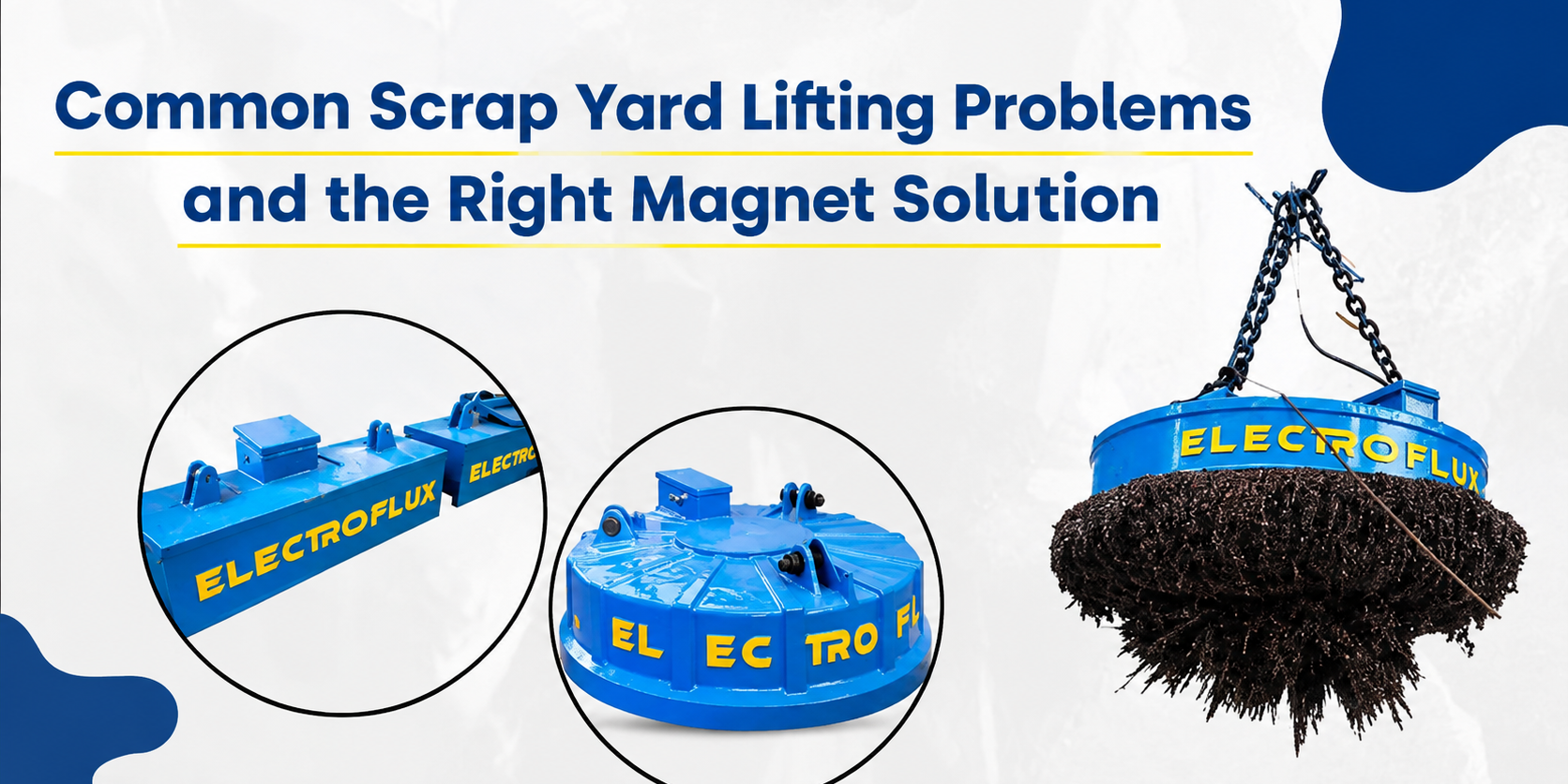
Circular magnets are frequently employed for handling shredded scrap, steel balls, pig iron and irregular ferrous material. With their spherical magnetic field, they can handle uneven loads better than the flat type and are appropriate for continuous loading operations.
2. Rectangular Lifting Magnets
Rectangular designs are useful for long structural sections, rails, billets, and steel plates. The larger magnetic surface provides a more uniform distribution of holding force over longer workpieces for improved lifting stability.
3. Battery-Powered Permanent Magnets
The usage of permanent scrap handling magnets is becoming more common on sites without a constant power supply. These machines eliminate external power cords and nevertheless retain reliable lifting performance for chosen applications.
4. Electromagnetic Scrap Lifting Systems
Electromagnets provide operators with complete control over load release through the electrical supply. They suit high-volume operations where rapid loading and unloading cycles improve overall plant efficiency.
A properly selected scrap lifting magnet also allows operators to handle different load sizes without mechanical gripping systems, reducing maintenance requirements.
Operational Practices That Improve Scrap Lifting Magnet Performance
Even the best scrap metal lifting magnets will function better if sound operating techniques are used.
Major recommendations include:
- Keep magnetic contact surfaces clean.
- Regularly check electrical connections.
- Position magnets centrally over the load.
- Schedule regular maintenance and insulation testing.
- Swap worn-out cables before they fail.
These simple techniques save downtime and prolong equipment service life.
Reducing Scrap Metal Lifting Problems Through Better Equipment Selection
Many lifting problems start with equipment specification, not with daily operation.
Buyers should assess the following before they purchase scrap metal lifting magnets:
- Kind of scrap being processed
- Average and max load weight
- Crane Capacity
- Duty cycle requirements
- Indoor or outdoor installation
- Ambient temperature during operation
- Required loading speed
A careful application assessment frequently results in more productivity gains than merely selecting a larger magnet.
Why Industries Continue to Trust Electro Flux Equipments for Scrap Handling Solutions
Reliable scrap handling begins with equipment intended for the realities of harsh industrial environments. Electro Flux Equipments has decades of engineering experience in producing magnetic lifting solutions for steel mills, foundries, recycling facilities, ports, shipbreaking yards and heavy engineering sectors.
The company believes application-specific equipment is a better choice than one-size-fits-all solutions for handling varied materials. The portfolio includes circular lifting electromagnets for loose, shredded and bundled scrap, rectangular lifting electromagnets for steel plates, billets, blooms, and structural sections and hydra magnets for excavator-mounted scrap handling activities.
All solutions are designed for great lifting capacity, reliable operation and long service life in tough operating circumstances. These systems boost productivity by enhancing material pickup, scrap leakage reduction and supporting continuous loading and unloading operations, minimising manual handling labour and operating delays.
Conclusion
Selecting the correct scrap handling magnets requires more than just lifting capacity. The performance depends on the kind of material, shape of load, operating circumstances and frequency of handling. Selecting the right equipment can alleviate scrap metal handling concerns, enhance safety, reduce loading cycles and improve yard operations.
Whether you require a large-capacity scrap lifting magnet for massive steel sections or specialised scrap metal lifting magnets for irregular loads, matching the solution to the application gives lasting value. With the technological know-how and industry experience of manufacturers like Electro Flux Equipments, businesses are better positioned to make educated decisions that help ensure reliable and efficient scrap handling operations.