


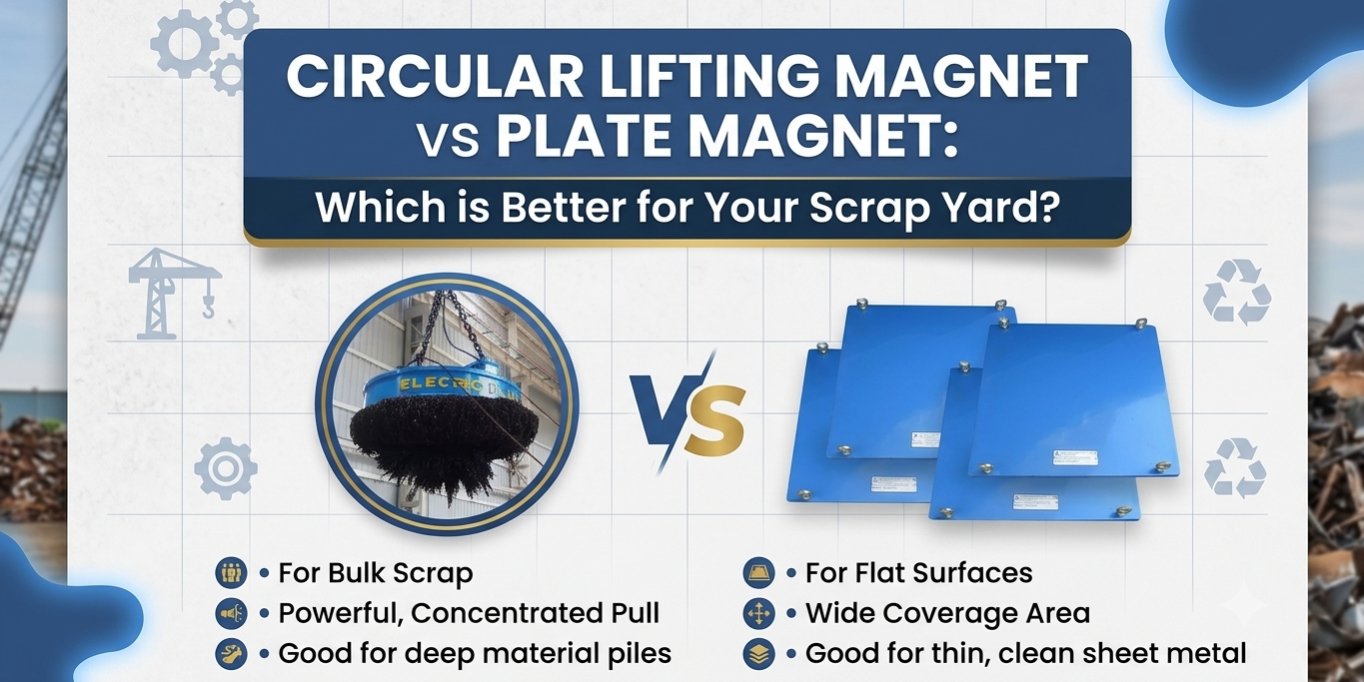
Efficient scrap handling depends on using the correct equipment for the materials being processed. Lifting magnets are critical for recycling yards and metal recovery plants to increase productivity, eliminate manual handling and provide safer operations.
The circular lifting magnet and plate magnets are among the most prevalent options. Both are meant to lift ferrous material but are constructed for distinct uses and operating situations. Choosing the improper type might impair loading speed, material recovery and overall efficiency.
If you are considering a circular electromagnet versus plate magnets for your business, you need to know the distinctions. This article will cover how each type operates, what they excel at and which choice will probably give better results in a scrap yard situation.
Understanding Circular Lifting Magnets
A circular lifting magnet is a round electromagnetic lifting device often mounted to cranes, excavators or material handlers. When energised, it creates a magnetic field that allows users to rapidly and efficiently pick up and move ferrous scrap.
These magnets are particularly effective for handling:
-
Shredded scrap
-
Steel turnings
-
Rebar
-
Structural steel offcuts
-
Mixed ferrous waste
The circular shape helps to spread the magnetic force equally and can be used to lift irregularly shaped and loosely packed items. That’s one reason why circular magnets are so popular in recycling plants, demolition projects, steel mills and scrap processing.
What Are Plate Magnets?
Plate magnets are flat rectangular lifting magnets, mostly used for handling regular-shaped and surfaced steel products. They are widely used for lifting steel plates, sheets, slabs, billets and manufactured components.
Plate magnets have stable and controllable lifting due to the magnetic field being concentrated on a flat contact area with good surface contact of the material. They are commonly used in manufacturing facilities, steel service centres, warehouses and fabrication workshops where precise handling is crucial.
Plate magnets work well with flat materials, but they are usually not appropriate for loose or irregularly shaped trash.
Circular Lifting Magnet vs Plate Magnet: Key Differences
Understanding the difference between plate and circular lifting magnet systems starts with the material being handled.
1. Material Handling Capability
Circular magnets are manufactured for large waste and uneven ferrous materials. They efficiently pick up metal from stockpiles and processing regions with widely varying forms and sizes.
Plate magnets perform best when handling flat steel products that offer consistent surface contact.
2. Pickup Efficiency
Many scrap yards use circular magnets because they can pull from many directions, meaning more pickups. This means operators can process more scrap in fewer lifting cycles.
Plate magnets are more limited when dealing with tangled, uneven, or fragmented metal.
3. Load Stability
Plate magnets are frequently more stable in lifting and transporting steel plates and sheets. Their flat form connects securely across the load surface.
Circular magnets prioritise collection efficiency rather than precision handling.
4. Operational Flexibility
A circular electromagnet can be adjusted to suit varying scrap streams throughout the day. It can handle demolition scrap, heavy melting steel or mixed ferrous waste.
Plate magnets are typically better suited to controlled industrial environments with predictable loads.
How to Choose a Lifting Magnet for a Scrap Yard
When evaluating how to choose lifting magnet for scrap yard applications, buyers should consider more than lifting capacity alone.
1. Review Your Material Mix
The sort of material you process on a daily basis should be the main consideration in your decision.
For operations that deal mostly with loose scrap, shredded metal and demolition waste, a circular lifting magnet is usually the most practical option. If flat steel products represent the majority of your workload, plate magnets may offer better performance.
2. Consider Throughput Requirements
Productivity is a major concern in modern scrap yards. Faster loading and unloading cycles help increase output and reduce operating costs.
Circular magnets can improve throughput by collecting large volumes of scrap in a single lift, reducing the number of handling cycles required.
3. Check Equipment Compatibility
The magnet should be compatible with the crane or material handler being used. Weight, power requirements, duty cycle, and mounting arrangements should all be assessed before purchase. A properly matched system improves reliability and minimises downtime.
4. Think Long-Term
The lowest-cost option is not always the most economical. Equipment that improves recovery rates and handling efficiency often delivers better value over its service life.
Which Magnet Is Better for Most Scrap Yards?
When comparing a circular lifting magnet vs plate magnet, the answer depends on the nature of the operation.
Circular electromagnets are a popular choice for scrap recycling plants, as they are intended to easily handle loose, uneven ferrous objects. Their capacity to collect mixed scrap fast helps to boost production and save handling time.
Plate magnets remain valuable for specialised applications involving steel plates, sheets, and fabricated products, but they generally lack the versatility required for typical scrap yard conditions.
Electro Flux Equipments: Proven Expertise in Magnetic Handling Solutions
Electro Flux Equipments has been providing industries with dependable magnetic lifting and material handling solutions for decades. We work with companies in the steel plant, foundry, scrap recycling, and heavy engineering sectors to learn and understand their operational challenges and needs.
With our extensive experience in providing reliable magnetic solutions, we can construct application-specific magnetic systems for efficient, safe and reliable material handling. By focusing on technical excellence, product durability and customer needs, we help organisations boost productivity and maintain long-term operational performance.
Conclusion
The choice between using a circular lifting magnet or plate magnets depends on the materials you are handling and the requirements of your operation. A circular electromagnet is superior for mixed ferrous scrap because it is more flexible, collects material faster, and is more productive in most scrap yards.
Plate magnets remain an effective option for handling flat steel products where load stability is the priority. By considering material type, throughput objectives and equipment compatibility, industries may choose the lifting solution that provides the highest long-term value.