


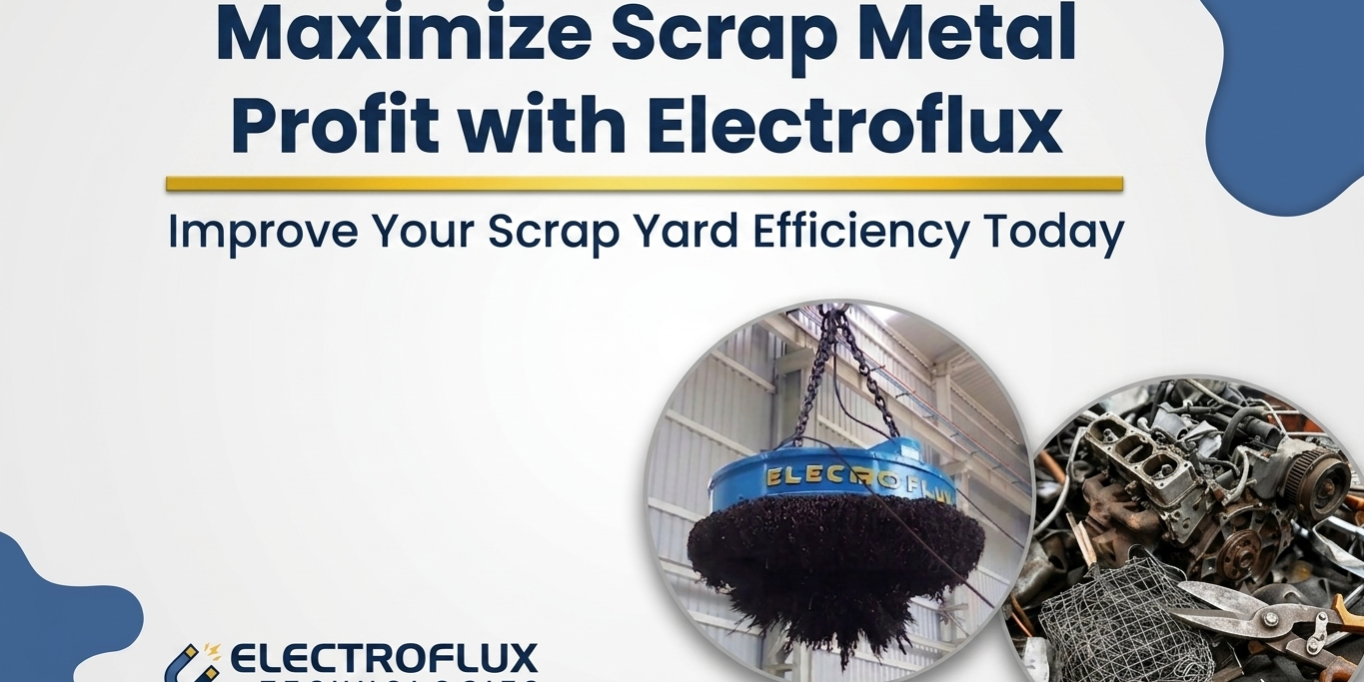
Speed directly influences profitability in a modern scrap yard. Any time spent isolating ferrous metals from mixed scrap adds labour expenses, reduces material throughput, and restricts potential revenue. Scrap volumes are still increasing, and operators are being asked to handle more material without major increases in staffing or equipment expenses.
This is where a scrap lifting magnet becomes an invaluable tool to the process. They are designed to quickly identify, pick up, and transport ferrous metals, and to make handling procedures that would otherwise require a lot of manual involvement run more smoothly.
Electromagnets, which are fitted to cranes, excavators or specialist handling equipment, enable scrap yards to process more in less time. Once we understand how they increase sorting efficiency, it becomes easier to see how they affect productivity and profitability in the long term.
Why Metal Sorting Speed is Important in Scrap Operations
Metal sorting is one of the most important processes in scrap processing. The faster the materials are sorted correctly, the faster they can go to shredding, baling, storage or transportation.
Bottlenecks often appear during operation because the sorting process is delayed. Mixed loads demand additional handling, and improper separation might lower the value of the processed scrap.
Many facilities are limited in their daily throughput by labour-intensive sorting procedures. A major goal for plant managers and yard personnel alike is consequently to increase the speed of sorting without sacrificing accuracy.
The Role of Electromagnets in Sorting Efficiency
1. Fast Identification & Retrieval of Ferrous Metals
A scrap lifting magnet immediately draws ferrous objects in mixed scrap streams. Instead of workers having to separate the steel components by hand, considerable amounts can be removed in one lifting cycle using the magnet.
This greatly reduces average processing yard handling time and enables operators to process arriving loads more effectively.
2. Continuous material flow
Unlike manual sorting procedures, scrap handling magnets allow for continuous operation. There is little stoppage in the lifting, moving, and depositing of materials.
This ongoing workflow eliminates downtime between sorting stages and ensures that downstream equipment continues to run at its most effective level.
3. Less Rehandling of Scrap
Among the hidden costs of scrap processing is rehandling. Materials that are sorted wrongly typically have to be rehandled before they are finally processed.
Scrap magnets help in enhancing separation accuracy at the first stage, hence reducing operational inefficiencies and wasteful handling.
The Real Reason Sorting Speed Can Double
The addition of electromagnets to the workflow has a dramatic effect for many operators. It’s not only because lifting is faster.
The real benefit is the result of combining numerous efficiency gains:
- Ferrous metals are recovered faster
- Lower manual labour required
- Fewer sorting errors
- Continuous flow of material
- Fewer equipment breakdowns
For example, a yard processing mixed demolition scrap would require multiple personnel to visually identify and separate steel components. An electromagnet can do much of the work in minutes, freeing employees to focus on quality control and higher-value activities.
This cumulative impact leads to sorting speeds often much higher than previous methods.
Profitability Gains Beyond Labour Savings
1. Higher Throughput Capacity
The faster the sorting, the more material can be processed within the same operational hours.
A yard processing 100 tonnes a day can deliver a large boost in throughput, without adding to its manpower or footprint. This increased throughput provides the potential to drive additional revenue from the existing infrastructure.
2. Higher Recovery Rates
Ferrous metals that are combined with non-ferrous materials often have lost value.
Electromagnet scrap yard operations can recover a higher percentage of recyclable metal, boosting total yield and the amount of value retrieved from each incoming cargo.
3. Reduced Equipment Wear
Efficient separation protects shredders, crushers and downstream processing gear from inappropriate materials.
Lower maintenance requirements and longer equipment service life can be achieved by reducing contamination, which also results in further cost savings over time.
Operational Example: Measuring the Impact
Look at a medium-sized scrap yard processing mixed industrial and demolition trash.
Before installation of the magnetic handling equipment:
-
Several workers hand sort ferrous metal.
-
At busy times, lineups of material might build up.
-
Throughput is limited by labour availability.
After the scrap handling magnets are integrated:
-
Ferrous metals are mined straight away.
-
The material flow is becoming more uniform.
-
Workers focus on inspection and selective sorting.
-
Daily processing capacity is greatly expanded.
Results differ from facility to facility, but the operational improvements are frequently measurable in a reasonably short amount of time.
Key Factors to Consider When Selecting Scrap Magnets
Not all magnetic systems deliver the same performance. Selecting the right equipment depends on several operational factors.
1. Material Characteristics
Scrap streams have different amounts of ferrous materials. The magnet’s size, weight, and power should be in accordance with the materials being recycled.
2. Duty Cycle Requirements
Facilities running on extended shifts need machinery that is made for continuous work. Reliability is especially critical in situations of high production volume.
3. Equipment Compatibility
Many electromagnets in scrap yards are connected with cranes, excavators, and material handlers. Compatibility with existing machinery maximises return on investment.
4. Energy Efficiency
Modern junkyard magnets are more often built to strike a balance between lifting performance and energy use, allowing operators to better manage operational expenses.
How Electro Flux Equipments Supports Efficient Scrap Processing
In scrap handling operations, equipment reliability has a direct impact on productivity. Downtime, inconsistent lifting performance, and maintenance issues can quickly affect processing efficiency and operating costs. Electro Flux Equipments has built its expertise around developing industrial magnetic solutions designed for demanding material handling environments.
With experience across a wide range of scrap processing applications, we focus on delivering durable and efficient magnetic systems that help operators maintain consistent workflow performance. Our deep understanding of industry requirements makes us a recognised name among businesses seeking dependable solutions for heavy-duty scrap handling and metal recovery operations.
Conclusion
A scrap lifting magnet is significantly more than just a material handling attachment. It is a productivity tool that impacts directly on throughput, recovery, labour efficiency and operating expenses. Scrap magnets can have a major impact on scrap yard operations by enabling faster separation of ferrous metals, decreasing rehandling, and allowing for continuous processing.
For companies looking for improved profitability and operational efficiency, investment in modern magnetic handling equipment is frequently one of the most viable enhancements. Companies such as Electro Flux Equipments continue to play a vital part in supporting these developments with reliable industrial magnetic solutions.