


Metal contamination rarely starts as a big problem. In most plants, it builds up slowly from equipment wear, raw materials coming in, or bad handling methods. The result is worse product quality, unplanned maintenance and increased operational expenses, sometimes unseen until output is impacted.
A properly built magnetic separation system is crucial to preventing these problems. It eliminates undesirable ferrous impurities before they damage downstream equipment or influence completed products. But many plants continue to operate with old or undersized equipment long after production demands have altered.
If your company has expanded, diversified materials or boosted output, your previous configuration may no longer provide the level of security your process requires. Here are seven clear signals it’s time to re-evaluate your separation strategy.
1. Metal Contamination Keeps Appearing in Finished Products
Repeated traces of metal in finished goods are one of the clearest warning signs.
Even if contamination levels remain low, every rejected batch increases production costs and affects customer confidence. Industries such as food processing, recycling, chemicals, ceramics, and minerals depend on consistent material purity.
A properly selected magnetic separation machine captures unwanted ferrous particles before they enter critical production stages. If contamination continues despite existing equipment, magnet strength, positioning, or separator design should be evaluated.
2. Processing Equipment Requires Frequent Repairs
Unexpected failures in crushers, mills, conveyors, mixers, and pumps often originate from metal entering the production line.
Small steel fragments may seem insignificant, yet they create excessive wear on expensive machinery. Magnetic separators that fail to remove contaminants allow these particles to circulate throughout the plant.
Modern rare earth magnetic assemblies commonly operate with magnetic field strengths exceeding 10,000 Gauss at the surface, allowing efficient recovery of fine ferrous particles in demanding industrial applications.
Reducing metal entry into processing equipment often lowers maintenance costs while extending equipment life.
3. Recovery Rates Have Started Falling
Plants constantly look for ways to improve material separation because recovery directly affects profitability. When valuable materials leave the process together with waste, separation efficiency becomes an operational concern rather than simply a quality issue.
- Reduced magnetic strength
- Poor separator placement
- Increased production capacity
- Changes in raw material characteristics
Reviewing the separation process often reveals opportunities to recover more usable material without major process changes.
4. Your Plant Has Expanded but the Separator Has Not
Production lines evolve over time. Capacity increases, faster conveyors, additional feed points, or new product lines place greater demands on existing equipment. Unfortunately, magnetic systems are often left unchanged while the rest of the plant grows.
A separator designed for lower throughput may struggle to maintain consistent contact with the material stream. Higher material depth reduces exposure to the magnetic field, allowing contaminants to pass through.
This is where a larger or redesigned magnetic separator for plant operations becomes necessary to maintain separation efficiency without restricting productivity.
5. Product Quality Becomes Inconsistent
Quality issues are not always caused by manufacturing processes. Incoming contamination often varies between suppliers, mining locations, recycled feedstock, or scrap sources. Without consistent removal, product quality becomes unpredictable.
Plants frequently notice:
- Higher rejection rates
- Customer complaints
- Increased inspection requirements
- Variations between production batches
A well-configured magnetic separation system creates greater consistency across changing raw material conditions.
6. Operators Spend Too Much Time Removing Metal Manually
Manual inspection still exists in many facilities, particularly where contamination levels fluctuate. While operator experience remains valuable, relying on manual removal creates several problems:
- Labour-intensive processes
- Slower production
- Inconsistent results
- Greater safety risks
Automation through correct placement of magnetic separators eliminates contamination continuously without disrupting production. This allows maintenance teams to focus on higher-value activities rather than repeated cleaning and inspection tasks.
7. Existing Equipment No Longer Matches Your Material
Not all separators are equally effective for all applications. Bulk minerals, foundry sand, coal, plastics recycling, chemicals, fertilisers, and aggregates all react differently in handling. Particle sizes, moisture content, flow characteristics, and contamination affect separator efficiency.
If the materials used in your production have evolved, your old magnetic separation machine will not meet the necessary efficiency criteria.
Analysis of the separator itself, magnetic strength, installation position, and cleaning methods can often result in marked improvement without any reconfiguration of the facility.
Looking Beyond the Magnet
The success of material separation depends on factors other than magnetic strength.
Results depend on plant structure, feed uniformity, conveyor speed, burden depth and maintenance methods. Regular inspections aid in detecting worn parts, tramp metal build-up and decreasing magnetic performance before they influence production.
Facilities that treat magnetic separation as part of their overall process optimisation typically experience fewer breakdowns, better product consistency, and lower operating costs.
How Electro Flux Equipments Helps Plants Achieve Better Separation Efficiency
Selecting separating equipment is not as simple as choosing the strongest magnet on the market. The ultimate design will be dependent upon the qualities of the material, plant layout, production capacity, levels of contamination and maintenance requirements. This is where the value is added by the experienced manufacturers.
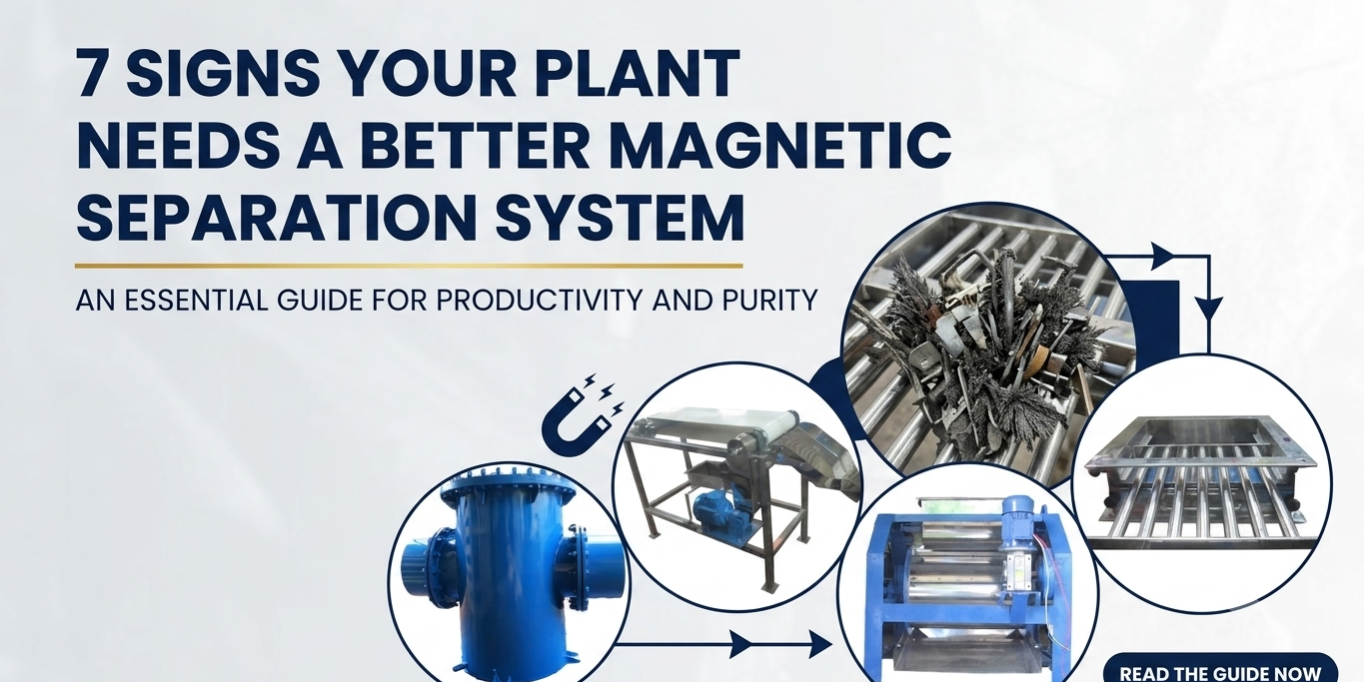
For decades, Electro Flux Equipments has been supporting sectors like mining, recycling, cement, power, ceramics and bulk material handling with magnetic separation systems like drum separators, magnetic roll separators, magnetic grill and housing systems and liquid line magnetic separators.
The application-driven approach helps organisations to pick equipment based on the individual processing conditions rather than the conventional catalogue standards, supporting reliable performance in difficult industrial environments.
Conclusion
The warning symptoms don’t usually show up all at once. Instead, they emerge gradually from increasing maintenance expenses, variable product quality, machine failures, and lost material recovery. Resolving these problems early with the proper magnetic separation machine helps enhance plant dependability, reduce contamination, and boost long-term operational efficiency.
A reasonable investment is to review your current magnetic separation system before problems arise. With experienced partners like Electro Flux Equipments, manufacturers are better placed to choose solutions that align with both present production requirements and future growth.