


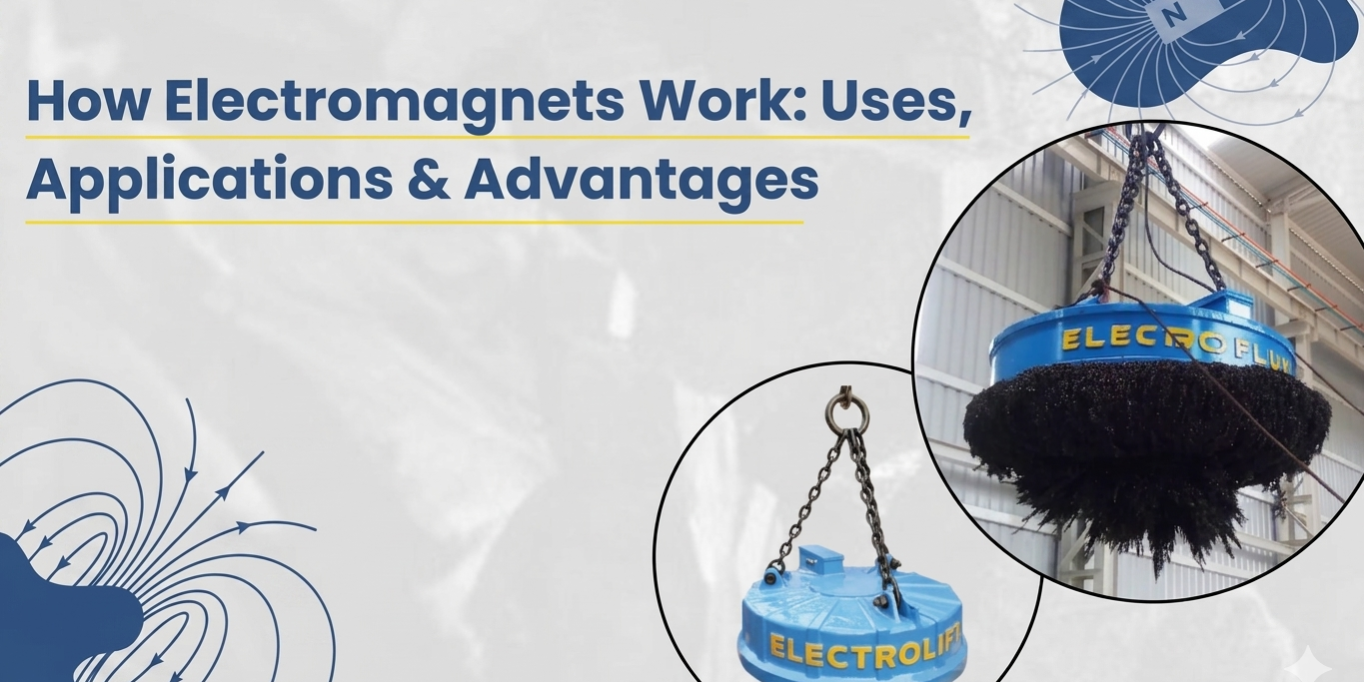
Electromagnets form the heart of any industry today. Whether it’s handling heavy scrap material in steel plants or facilitating complex transport mechanisms, the importance of electromagnets is profound. To comprehend how industrial machinery makes use of magnetic power in a controlled manner, knowledge about the working principles and applications of electromagnets is essential.
This article breaks down how electromagnets work, explains the science behind it, and shows how industries use them in daily operations.
What Is an Electromagnet?
Electromagnets are special types of magnets, and they produce a magnetic field only when electric currents flow through them. They are unlike regular magnets because they can be switched off. This quality alone gives it a great advantage in applications where controlled usage becomes an important requirement.
The simple structure of an electromagnet involves a coil of wire, most often made of copper, coiled around a metal core, typically iron. The magnetic field is formed by running electric currents through the coil of wire, which is strengthened by the metal core to form a strong field.
How Does an Electromagnet Work?
To understand how does an electromagnet work, you must first study the connection between electricity and magnetism.
Electric currents in conductors create magnetic fields. It is one of the basic principles of physics. Electromagnetssimilar way. Their wires are wound in coils to produce concentrated magnetic fields. The higher number of turns in a coil makes the magnetic fields stronger.
The core material is also very important for the working of electromagnet. Generally, soft iron is used for electromagnets since it boosts the magnetic force without keeping the permanent magnetism after the current ceases. Thus, controlling an electromagnet can be achieved with precision.
Therefore, the way in which electromagnets work can be summarised into three main points:
-
Electric current strength
-
Number of coil turns
-
Type of core material
Adjusting any of these changes the strength of the magnetic field.
Different Types of Electromagnets Used In Industries
Depending on various industries, there are different kinds of electromagnets available. Below are some of the popular electromagnet example.
-
DC Electromagnet: Runs on direct current and is well known for having a constant magnetic field.
-
AC Electromagnet: Operates using alternating current and best suited for applications that require frequent switching.
-
Superconducting Electromagnets: Popular in areas such as medical imaging and scientific research. They generate extremely powerful magnetic fields.
Based on requirements, availability of energy, and other factors, different types of electromagnets can be used.
Industrial Applications of Electromagnets
The ability of electromagnets to produce controlled magnetic fields is why they are applied in so many areas. Below are some examples that describe how electromagnets work in different industrial settings.
1. Material Handling
Electromagnets in cranes carry out the task of lifting and transporting large pieces of ferrous material like steel plates and scrap metal with precision. Switching on and off the electromagnet current enables the picking up and releasing of loads instantly without human effort, thereby making the task easier and more secure.
2. Recycling Industry
Electromagnets positioned at the top of conveyor belts help segregate iron and steel from mixed materials. The process improves recycling efficiency and helps in recovering valuable materials that would otherwise end up as waste.
3. Mining and Cement Plants
Electromagnetic separators help remove metallic impurities like tramp iron from raw materials that have been carried on conveyor belts. It prevents equipment wear and tear of the operating machines and ensures the quality of the products remains high.
Advantages of Electromagnets In Industrial Operations
There are several tangible advantages of electromagnets which have a direct impact on industrial efficiency.
1. Controlled Operation
The electromagnets will only work when an electrical current flows through them, allowing full control over the application of magnetic force.
For example, when used in lifting systems, loads can be lifted and set down instantly by controlling the power supply to the magnets. Electromagnets can be coordinated with sensors within automation systems so that they work at precise times.
2. Adjustable Strength
The magnetic strength in an electromagnet rises or falls according to the magnitude of the current flowing through it. Large currents produce high levels of magnetism, while small currents create lower levels of magnetism.
This allows for varying amounts of loads to be handled using the same equipment. For instance, an electromagnetic separator can be adjusted to separate small metallic elements without disrupting the material stream.
This feature is essential for industries where material characteristics change frequently.
3. High Efficiency
Electromagnets can easily handle repetitive processes. Once set up, there is little need for hands-on management.
In conveyor belts, electromagnetic separators can operate round-the-clock without compromising their efficiency. The amount of power used depends on their use; hence, no energy is lost if they are inactive.
Modern electromagnets are also fitted with efficient energy mechanisms that minimise heat loss and improve the overall performance.
4. Versatility
Electromagnets are flexible and can be applied in various uses. The modification of components such as the windings, core, or electrical supply enables the same concept to be utilised in lifting, sorting, movement, and detection.
They have numerous applications in sectors such as production, mining, health care, and transport. Electromagnets can be tailored to serve particular purposes without having to alter the whole system.
5. Safety
Manual handling of heavy metal items poses considerable danger. The use of electromagnets eliminates the need for physical intervention in handling the materials.
In hazardous conditions like those at very high temperatures or where there is a possibility of encountering metal debris, remote operations of electromagnets enhance worker safety.
Additionally, controlled release of the metallic waste reduces the risk of accidental drops compared to mechanical lifting methods.
Electro Flux Equipments: Your Reliable Partner for Industrial-Grade Equipment
Electro Flux Equipments reliable and high-performance industrial-grade magnetic equipment. They are concerned with designing equipment that works efficiently, lasts long, and performs its intended purpose.
Mining, cement production, and recycling industries are some of the sectors that require durable equipment. Electro Flux Equipments caters to this requirement by providing practical solutions.
Conclusion
Electromagnets have a significant importance in many industries today. They have a unique capability of producing controllable magnetic fields and hence are ideal for use in different applications, ranging from lifting heavy loads to high-precision equipment.
Knowing how does an electromagnet work will help you understand its superiority over other magnets. At the same time, it will ensure proper selection and utilisation in practical operations. With proven solutions from companies like Electro Flux Equipments, industries can achieve both efficiency and reliability in their processes.